When to plant grass seed
For cool-season lawns, late summer to early autumn — and the window is narrower than most people think. Extension guidance puts the optimum between about 15 August and 15 September, moving with latitude: early August to early September in northern Illinois, mid-August to mid-September in the centre of the state, September in the south. Warm-season grasses are the opposite case and go in before summer, with a target of 1 to 14 May in that region.
Updated on 2026-10-07.
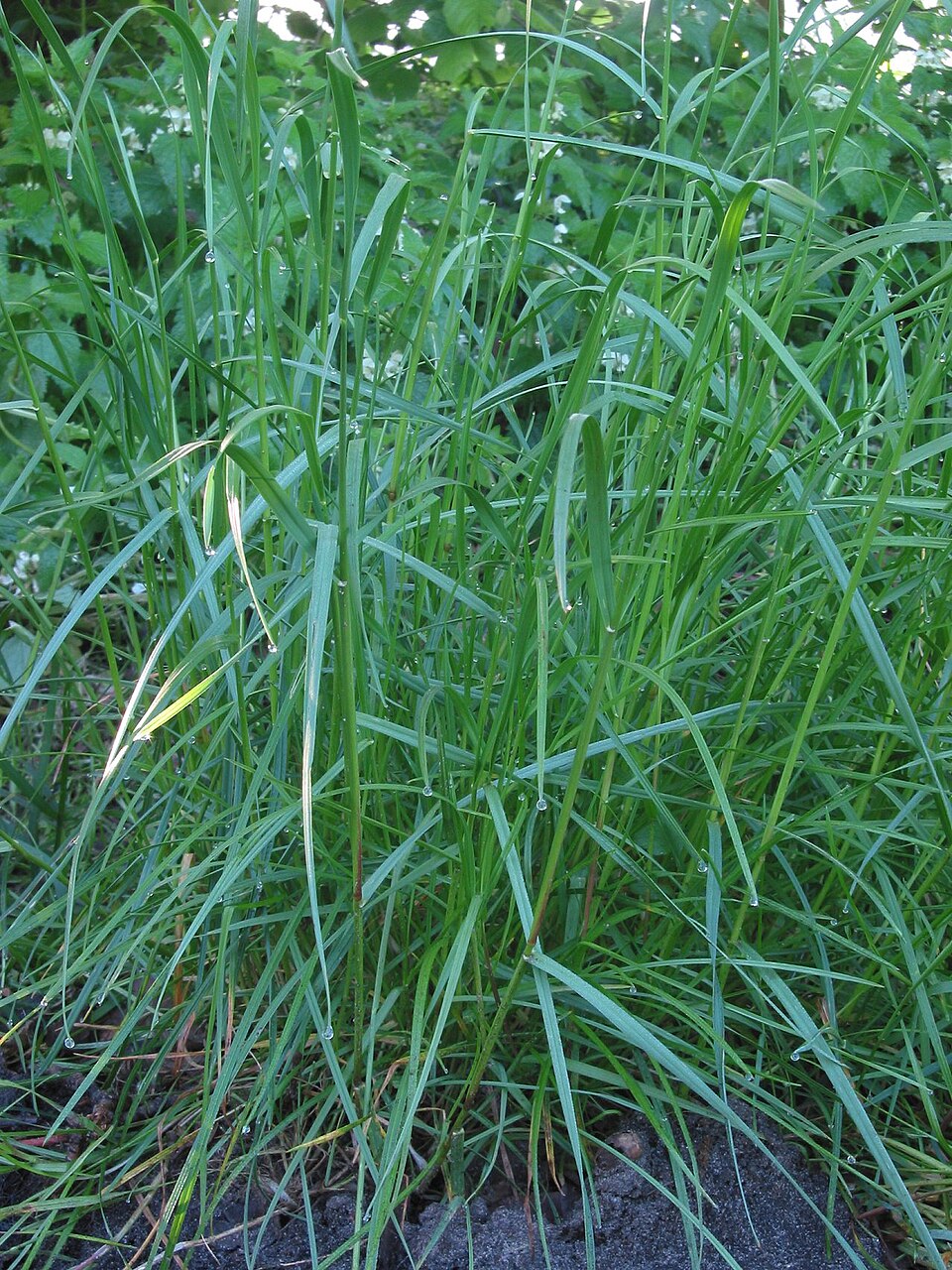
Perennial ryegrass: a cool-season grass, sown in late summer rather than spring.
The facts in one table
| Climate band | Months | Sign on the plant |
|---|---|---|
| Northern hemisphere — cool-season grass, best window | Aug · Sep | Soil still warm, nights cooling, weed pressure falling |
| Southern hemisphere — cool-season grass, best window | Feb · Mar | Soil still warm, nights cooling, weed pressure falling |
| Northern hemisphere — cool-season grass, second choice | Apr | Only if the main window was missed; seedlings then face summer |
| Southern hemisphere — cool-season grass, second choice | Oct | Only if the main window was missed; seedlings then face summer |
| Northern hemisphere — warm-season grass | May | Before full summer heat, once the soil has warmed |
| Southern hemisphere — warm-season grass | Nov | Before full summer heat, once the soil has warmed |
Sources written in the northern hemisphere give northern months. The southern row is the same job shifted by six months, which is an approximation of the season — the sign on the plant is what you should actually act on.
Sources: University of Illinois Extension · Clemson Cooperative Extension (HGIC)
Why late summer beats spring
The reasoning in the extension literature is about what the seedling faces next. Sowing in late summer gives adequate soil moisture, warm soil and limited weed pressure, and the seedlings then get two cool growing seasons — autumn and the following spring — to establish. A spring sowing gets one, and then runs straight into the heat and drought of summer with a root system that is only a few months old.
That is why April is described as a second choice rather than an equal option. It works, but it works less often, and a dry June is enough to undo it. If the late-summer window has already passed, the honest options are April or waiting a year.
Sources: University of Illinois Extension · Clemson Cooperative Extension (HGIC)
Cool-season and warm-season grasses have opposite calendars
Cool-season grasses — fescues, ryegrasses, bluegrass — grow hardest in spring and autumn and suffer in summer, so they are sown in late summer. Warm-season grasses do the reverse: they love heat, so the ideal time to sow is before the start of summer, once the soil has warmed. Clemson Extension gives a target date of 1 to 14 May for successful seeding and establishment of warm-season grasses across its region.
Sowing one on the other's calendar is a reliable way to waste a bag of seed. The useful first step is therefore identifying which type the lawn is, which usually follows from the climate: cool-season in temperate and cold regions, warm-season in hot ones, with a transition zone that uses both.
Sources: University of Illinois Extension · Clemson Cooperative Extension (HGIC)
Southern hemisphere
All the published dates above are northern-hemisphere ones. Shifted by six months, the cool-season window lands around February and March and the warm-season one around November, which is what the southern rows in the table show. The reasoning transfers unchanged: sow cool-season grass so the seedlings get the cool part of the year, and warm-season grass so they get the warm part.
What does not transfer is the date itself, and this is the family of question where that matters most. A northern-hemisphere lawn article telling a reader in Brazil or Australia to sow in late August is telling them to sow in late winter, which is the wrong half of the year for both grass types.
Sources: University of Illinois Extension · Clemson Cooperative Extension (HGIC)
Sow: Lawn grass
Cool-season and warm-season grasses have opposite calendars. Identify which you have before choosing a date.
| Climate band | Months | Sign on the plant |
|---|---|---|
| Northern hemisphere — cool-season grass, best window | Aug · Sep | Soil still warm, nights cooling, weed pressure falling |
| Southern hemisphere — cool-season grass, best window | Feb · Mar | Soil still warm, nights cooling, weed pressure falling |
| Northern hemisphere — cool-season grass, second choice | Apr | Only if the main window was missed; seedlings then face summer |
| Southern hemisphere — cool-season grass, second choice | Oct | Only if the main window was missed; seedlings then face summer |
| Northern hemisphere — warm-season grass | May | Before full summer heat, once the soil has warmed |
| Southern hemisphere — warm-season grass | Nov | Before full summer heat, once the soil has warmed |
Sources: University of Illinois Extension · Clemson Cooperative Extension (HGIC)
What most people get wrong
- "Spring is the natural time to sow a lawn." For cool-season grass, late summer to early autumn is the optimum and April is the second choice.
- "Summer sowing works if you water enough." Extension guidance specifically advises against seeding a cool-season lawn in summer.
- "One date suits all grass." Cool-season and warm-season grasses have opposite windows — roughly mid-August to mid-September versus the first half of May.
- "Dates from an American or British article apply anywhere." They are northern-hemisphere dates and are about six months out south of the equator.
Sources: University of Illinois Extension · Clemson Cooperative Extension (HGIC)
Frequently asked questions
- When is the best time to plant grass seed?
- For cool-season grass, between about 15 August and 15 September in the northern hemisphere, with the exact window moving with latitude. April is the second choice.
- When do I sow warm-season grass?
- Before the start of summer, once the soil has warmed — Clemson Extension gives a target of 1 to 14 May for its region.
- Why not sow in summer?
- Seedlings from a summer or spring sowing face the heat and drought of summer with an immature root system, which makes survival much harder.
How to read the numbers
The numbers on “When to plant grass seed” come from the facts table at the top, with the official source alongside.
Where the data comes from
Each section of “When to plant grass seed” names its source (agency, university or breed club) with a verification date.
What this page doesn’t replace
Educational information, not a substitute for a vet, agronomist or specialist assessing your specific case.
More about this page
The Lawn grass calendar changes with the hemisphere
Sowing Lawn grass has 6 windows recorded here, split between the northern and southern hemisphere — because February in Brazil is August in Europe, and copying the month from a guide written for the wrong hemisphere rushes or delays the plant.
Words on this page
Formative pruning vs. maintenance pruning
Formative pruning happens in a plant’s first years and sets the permanent shape of the main branches; maintenance pruning is yearly, removes dead, diseased or crossing branches, and does not change the plant’s architecture. Mixing the two up is the most common reason a fruit tree fails to bear fruit.
Dormancy
The period when a plant slows its metabolism and stops visible growth, usually in autumn and winter, to survive cold or drought. Pruning, transplanting or fertilising during dormancy is usually less stressful for the plant than doing it in full growth.
Hardiness zone
A numbered band that ranks a region by the average coldest winter temperature it reaches, used to tell whether a plant survives there outdoors. The reference system is the US one (USDA), from zone 1, coldest, to 13, warmest.
Standard definition by USDA — Agricultural Research Service, Plant Hardiness Zone Map · Hardiness zone
Hemisphere
Half of the globe split by the equator. The seasons flip between the two: when it is winter in the northern hemisphere, it is summer in the southern one, which shifts the pruning, bloom and harvest calendar described on this page.
Life cycle
The sequence of stages an organism passes through from birth to death — for an animal, young, adult and senior; for a plant, germination, growth, flowering and, in annuals, death after setting seed.
Hypoallergenic
A term used for breeds that shed less allergen into the environment, usually because they shed less fur. No dog or cat breed is fully allergen-free: a cat’s main allergen comes from saliva and skin, not only fur, and a very sensitive person can react to any breed.
Standard definition by American Kennel Club · Hypoallergenic
Sources
- Planting a New Lawn — University of Illinois Extension. Checked on 2026-10-07.
- Lawn Establishment — Clemson Cooperative Extension (HGIC). Checked on 2026-10-07.