When to prune hydrangeas
The month depends entirely on where the plant makes its flower buds. Mopheads and lacecaps — Hydrangea macrophylla — flower from mid- to late summer on the previous year's growth, so the RHS prunes them in late winter to early spring and advises waiting until mid-spring before cutting stems back to the first or second strong healthy pair of buds below the faded bloom. Hydrangea paniculata flowers on the current year's growth, so it is cut back each spring to a framework of branches.
Updated on 2026-10-07.
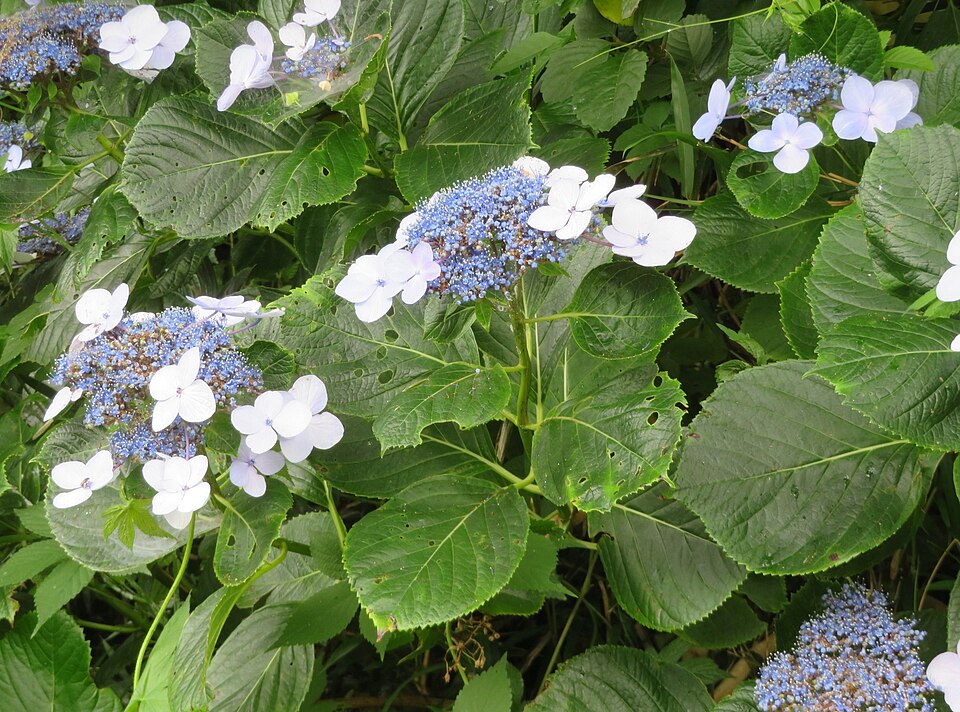
Hydrangea macrophylla: flower buds are set the summer before they open.
The facts in one table
| Climate band | Months | Sign on the plant |
|---|---|---|
| Northern hemisphere — mophead and lacecap (H. macrophylla) | Feb · Mar · Apr | Wait until mid-spring, then cut back to the first or second strong pair of buds below the faded bloom |
| Southern hemisphere — mophead and lacecap (H. macrophylla) | Aug · Sep · Oct | Wait until mid-spring, then cut back to the first or second strong pair of buds below the faded bloom |
| Northern hemisphere — panicle hydrangea (H. paniculata) | Mar · Apr | Cut last year's stems back to a pair of healthy buds on the permanent framework |
| Southern hemisphere — panicle hydrangea (H. paniculata) | Sep · Oct | Cut last year's stems back to a pair of healthy buds on the permanent framework |
Sources written in the northern hemisphere give northern months. The southern row is the same job shifted by six months, which is an approximation of the season — the sign on the plant is what you should actually act on.
Source: Royal Horticultural Society
Old wood or new wood: the whole question
Mopheads and lacecaps set their flower buds the summer before they bloom. That is why the RHS says they flower on the previous year's growth, and why the pruning advice is so conservative: wait until mid-spring, then take the stem back only as far as the first or second strong healthy pair of buds below the dead flower head. Anything more aggressive is removing flower buds that were already formed.
Hydrangea paniculata works the other way. It flowers on growth made in the current season, so the RHS notes that although the only essential work is removing dead wood in spring, the plant flowers more prolifically when pruned back annually to a framework of branches, with last year's stems cut to a pair of healthy buds each spring. Hard pruning helps this type and hurts the other.
Source: Royal Horticultural Society
Renewing an old plant
For established mopheads and lacecaps the RHS recommends cutting out one or two of the oldest stems at the base, which encourages replacement growth that will flower better. Done every year, that rolls the plant over gradually rather than shocking it, and it is the single most useful thing to do to a hydrangea that has become a thicket of thin, barely flowering stems.
The reason to spread renewal over several years rather than cutting everything down at once is the same bud logic: on a mophead, the old stems carry this summer's flowers. Removing a fifth of them a year gets you a renewed plant without a flowerless season.
Source: Royal Horticultural Society
Which months, in which hemisphere
The RHS months are northern-hemisphere months: late winter to mid-spring is roughly February to April in Britain. South of the equator the same point in the plant's year falls around August to October, which is what the southern rows in the table show. The shift is a six-month approximation, and the instruction that actually transfers is the one about buds — wait until the plant is clearly starting into growth, then cut to the first strong pair of buds below the old flower.
One more reason not to rush: the dead flower heads left on over winter give the buds beneath them some protection in cold areas. Tidying them off in autumn looks neater and removes that protection at exactly the wrong time.
Source: Royal Horticultural Society
Prune: Hydrangea
Identify the type first. Cutting a mophead hard in spring removes the wood that was going to flower.
| Climate band | Months | Sign on the plant |
|---|---|---|
| Northern hemisphere — mophead and lacecap (H. macrophylla) | Feb · Mar · Apr | Wait until mid-spring, then cut back to the first or second strong pair of buds below the faded bloom |
| Southern hemisphere — mophead and lacecap (H. macrophylla) | Aug · Sep · Oct | Wait until mid-spring, then cut back to the first or second strong pair of buds below the faded bloom |
| Northern hemisphere — panicle hydrangea (H. paniculata) | Mar · Apr | Cut last year's stems back to a pair of healthy buds on the permanent framework |
| Southern hemisphere — panicle hydrangea (H. paniculata) | Sep · Oct | Cut last year's stems back to a pair of healthy buds on the permanent framework |
Source: Royal Horticultural Society
What most people get wrong
- "All hydrangeas are pruned the same way." Mopheads and lacecaps flower on last year's wood; paniculata flowers on this year's. The treatment is opposite.
- "Cut the dead heads off in autumn." They give the buds below some protection over winter; the RHS advice is to wait until mid-spring.
- "My hydrangea stopped flowering, so it needs harder pruning." On a mophead, hard pruning is usually the cause. Removing one or two of the oldest stems at the base is the renewal method.
Source: Royal Horticultural Society
Frequently asked questions
- When should I prune a mophead hydrangea?
- In late winter to early spring, and the RHS advises waiting until mid-spring before cutting the stems back to the first or second strong healthy pair of buds below the faded bloom.
- When do I prune Hydrangea paniculata?
- Each spring: cut last year's stems back to a pair of healthy buds to maintain a permanent framework. Removing dead wood in spring is the only essential work, but annual pruning gives more flowers.
- How do I renew an old, congested hydrangea?
- Cut out one or two of the oldest stems at the base each year. That encourages replacement growth without losing a whole season of flowers.
How to read the numbers
The numbers on “When to prune hydrangeas” come from the facts table at the top, with the official source alongside.
Where the data comes from
Each section of “When to prune hydrangeas” names its source (agency, university or breed club) with a verification date.
What this page doesn’t replace
Educational information, not a substitute for a vet, agronomist or specialist assessing your specific case.
More about this page
The Hydrangea calendar changes with the hemisphere
Pruneing Hydrangea has 4 windows recorded here, split between the northern and southern hemisphere — because February in Brazil is August in Europe, and copying the month from a guide written for the wrong hemisphere rushes or delays the plant.
Words on this page
Formative pruning vs. maintenance pruning
Formative pruning happens in a plant’s first years and sets the permanent shape of the main branches; maintenance pruning is yearly, removes dead, diseased or crossing branches, and does not change the plant’s architecture. Mixing the two up is the most common reason a fruit tree fails to bear fruit.
Dormancy
The period when a plant slows its metabolism and stops visible growth, usually in autumn and winter, to survive cold or drought. Pruning, transplanting or fertilising during dormancy is usually less stressful for the plant than doing it in full growth.
Hardiness zone
A numbered band that ranks a region by the average coldest winter temperature it reaches, used to tell whether a plant survives there outdoors. The reference system is the US one (USDA), from zone 1, coldest, to 13, warmest.
Standard definition by USDA — Agricultural Research Service, Plant Hardiness Zone Map · Hardiness zone
Hemisphere
Half of the globe split by the equator. The seasons flip between the two: when it is winter in the northern hemisphere, it is summer in the southern one, which shifts the pruning, bloom and harvest calendar described on this page.
Life cycle
The sequence of stages an organism passes through from birth to death — for an animal, young, adult and senior; for a plant, germination, growth, flowering and, in annuals, death after setting seed.
Hypoallergenic
A term used for breeds that shed less allergen into the environment, usually because they shed less fur. No dog or cat breed is fully allergen-free: a cat’s main allergen comes from saliva and skin, not only fur, and a very sensitive person can react to any breed.
Standard definition by American Kennel Club · Hypoallergenic
Sources
- Hydrangea pruning — Royal Horticultural Society. Checked on 2026-10-07.