What do hedgehogs eat?
Invertebrates, and a wide range of them. The British Hedgehog Preservation Society describes hedgehogs eating mostly invertebrates, with beetles, caterpillars and earthworms being particularly important, along with slugs and many kinds of insects such as earwigs, bugs, grasshoppers and fly larvae. The two things never to put out are the two things most often put out: milk, because hedgehogs are lactose intolerant, and bread, which has no nutritional benefit for them.
Updated on 2026-10-07.
Feeding wild animals changes their behaviour and can harm them. Where this page mentions supplementary food, follow the wildlife body cited, and if you find a sick or injured animal, consult a veterinarian or a licensed rehabilitator.
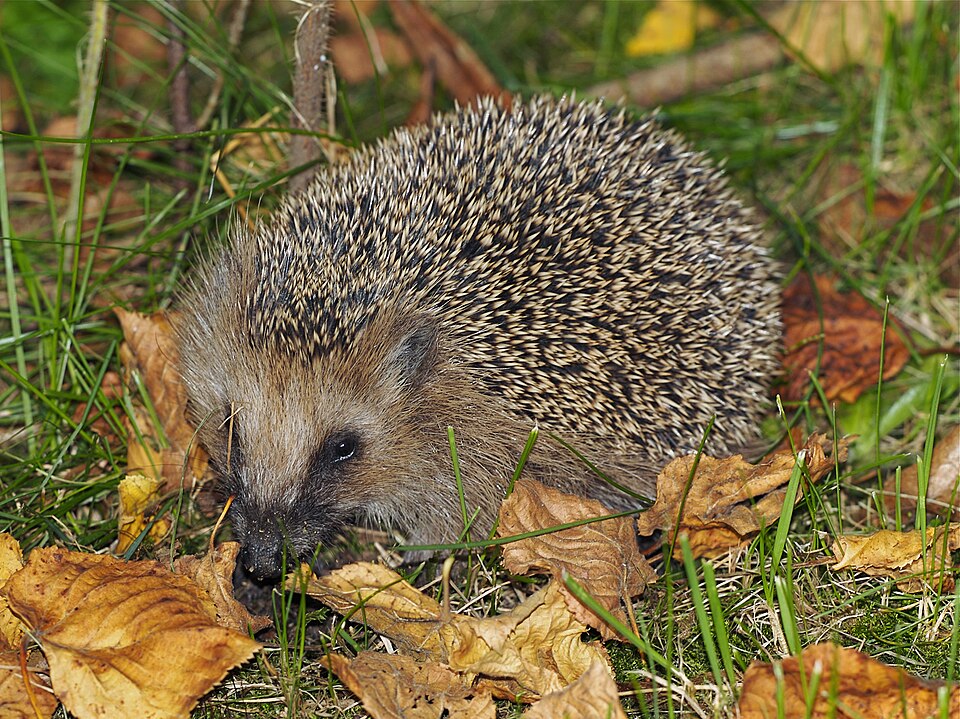
European hedgehog (Erinaceus europaeus): beetles, caterpillars and earthworms are the core of the diet.
The facts in one table
| Feeding type | insectivore |
| Most important prey | Beetles, caterpillars and earthworms |
| Also eaten | Slugs, earwigs, bugs, grasshoppers and fly larvae |
| Safe supplementary food | Meaty hedgehog food, meaty cat or dog food, cat biscuits — plus fresh water |
| Never give | Milk (hedgehogs are lactose intolerant) and bread (no nutritional value) |
Source for each row: British Hedgehog Preservation Society, PTES and RSPCA.
Sources: British Hedgehog Preservation Society · People's Trust for Endangered Species · RSPCA
An insect eater, not a slug specialist
Slugs get all the publicity, but they are not the centre of the diet. The invertebrates the hedgehog charities single out as particularly important are beetles, caterpillars and earthworms; slugs appear in a longer list alongside earwigs, bugs, grasshoppers and fly larvae. That distinction has a practical consequence for gardeners: a garden managed for beetles and worms — leaf litter, log piles, undisturbed corners, no slug pellets — supports hedgehogs better than a garden with a lot of slugs in it.
It also sets expectations correctly. A hedgehog is a useful garden animal, but it is not a slug control system, and a hedgehog-friendly garden is one that holds a broad invertebrate population rather than one particular pest.
Sources: British Hedgehog Preservation Society · People's Trust for Endangered Species
Supplementary feeding, done properly
When extra food is appropriate, the charities give the same short list: meaty hedgehog food, meaty cat or dog food, or cat biscuits, with fresh water alongside. Water matters at least as much as food in dry weather. Put food in a sheltered spot where cats and foxes cannot simply clear it, and treat it as a supplement to natural foraging, not a replacement.
Feeding wild animals changes their behaviour and can harm them. Where this page mentions supplementary food, follow the wildlife body cited, and if you find a sick or injured animal, consult a veterinarian or a licensed rehabilitator.
Sources: British Hedgehog Preservation Society · People's Trust for Endangered Species · RSPCA
Why milk and bread do real harm
The milk advice is not squeamishness. Hedgehogs are lactose intolerant, so milk upsets the gut and causes diarrhoea — dangerous in a small animal, especially a young or already weak one. Bread is a different failure: it is low in energy and nutritionally close to worthless for them, so it fills the animal without feeding it. A saucer of bread and milk, the classic offering, manages both problems at once.
Water is the part people forget, and it is the easier win. A shallow dish of fresh water, topped up and kept where a hedgehog can reach it, costs nothing and matters most in exactly the dry spells when earthworms go deep and natural prey gets hard to find.
Sources: British Hedgehog Preservation Society · RSPCA
What most people get wrong
- "Hedgehogs love bread and milk." Milk causes diarrhoea because hedgehogs are lactose intolerant, and bread has no nutritional benefit for them.
- "Hedgehogs mainly eat slugs." Beetles, caterpillars and earthworms are singled out as particularly important; slugs are one item on a longer list.
- "Feeding them means they stop foraging." Supplementary food is fine as a supplement — the point is that it should not be the whole diet, and water matters too.
Sources: British Hedgehog Preservation Society · People's Trust for Endangered Species · RSPCA
Frequently asked questions
- Can I give a hedgehog milk?
- No. Hedgehogs are lactose intolerant and milk can upset their stomach and cause diarrhoea. Put out fresh water instead.
- What can I feed a hedgehog?
- Meaty hedgehog food, meaty cat or dog food or cat biscuits, with fresh water alongside, in a sheltered spot.
- Is bread bad for hedgehogs?
- It provides no nutritional benefit and is low in energy, so it fills the animal without feeding it. It is not a suitable food.
- What should I do if a hedgehog looks ill?
- Do not try to treat it: contact a wildlife rescue or consult a veterinarian. A hedgehog out in daylight or sitting still in the open is usually a sign something is wrong.
How to read the numbers
The numbers on “What do hedgehogs eat?” come from the facts table at the top, with the official source alongside.
Where the data comes from
Each section of “What do hedgehogs eat?” names its source (agency, university or breed club) with a verification date.
What this page doesn’t replace
Educational information, not a substitute for a vet, agronomist or specialist assessing your specific case.
Go deeper at the official source
To go deeper than “What do hedgehogs eat?”, the source named below publishes the original document.
Words on this page
Toxicity
A plant’s or substance’s capacity to harm an organism, which varies with the species exposed, the amount ingested and the animal’s size. A plant "toxic to dogs" is not necessarily toxic to humans at the same dose, and the reverse holds too.
Standard definition by ASPCA — Animal Poison Control Center · Toxicity
Life cycle
The sequence of stages an organism passes through from birth to death — for an animal, young, adult and senior; for a plant, germination, growth, flowering and, in annuals, death after setting seed.
Hypoallergenic
A term used for breeds that shed less allergen into the environment, usually because they shed less fur. No dog or cat breed is fully allergen-free: a cat’s main allergen comes from saliva and skin, not only fur, and a very sensitive person can react to any breed.
Standard definition by American Kennel Club · Hypoallergenic
Hemisphere
Half of the globe split by the equator. The seasons flip between the two: when it is winter in the northern hemisphere, it is summer in the southern one, which shifts the pruning, bloom and harvest calendar described on this page.
Dormancy
The period when a plant slows its metabolism and stops visible growth, usually in autumn and winter, to survive cold or drought. Pruning, transplanting or fertilising during dormancy is usually less stressful for the plant than doing it in full growth.
Hardiness zone
A numbered band that ranks a region by the average coldest winter temperature it reaches, used to tell whether a plant survives there outdoors. The reference system is the US one (USDA), from zone 1, coldest, to 13, warmest.
Standard definition by USDA — Agricultural Research Service, Plant Hardiness Zone Map · Hardiness zone
Sources
- Hedgehogs — The Basic Facts — British Hedgehog Preservation Society. Checked on 2026-10-07.
- Hedgehog — facts and figures / healthy hedgehog dinners — People's Trust for Endangered Species. Checked on 2026-10-07.
- Attracting hedgehogs to your garden — RSPCA. Checked on 2026-10-07.