What do foxes eat?
Red foxes are omnivorous, but the National Park Service is clear that most of the diet is made up of rabbits and mice. Small mammals — voles, mice, lemmings, ground squirrels and hares — are the bulk of the food for most of the year, with poultry, squirrels, muskrats, quail, small non-game birds, insects, nuts and fruit taken in smaller amounts. Berries, especially blueberries and crowberries, matter from July onwards and sometimes through winter when other foods are scarce.
Updated on 2026-10-07.
Feeding wild animals changes their behaviour and can harm them. Where this page mentions supplementary food, follow the wildlife body cited, and if you find a sick or injured animal, consult a veterinarian or a licensed rehabilitator.
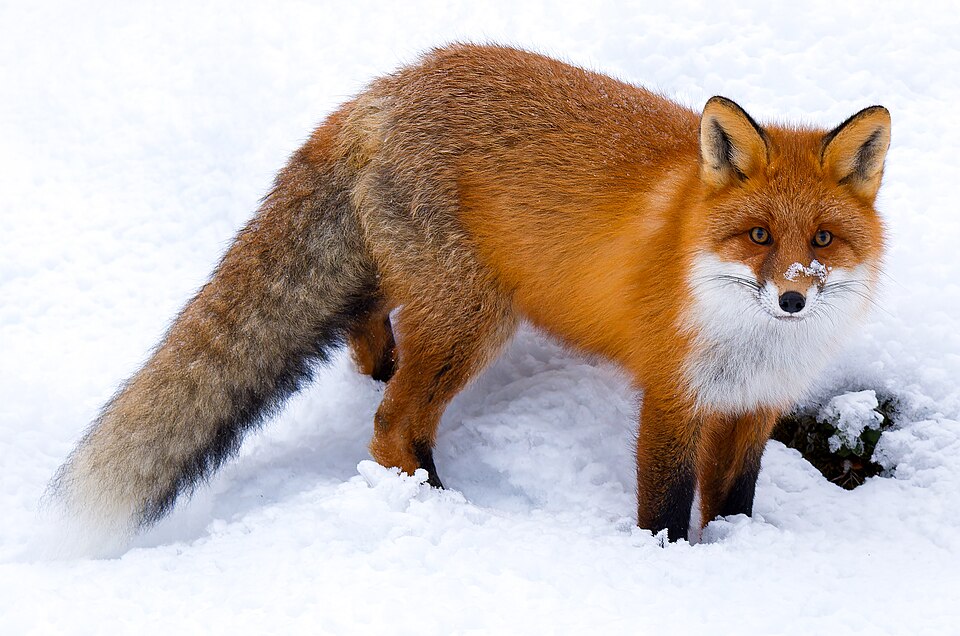
Red fox (Vulpes vulpes): an omnivore whose diet is still dominated by small mammals.
The facts in one table
| Feeding type | omnivore |
| Bulk of the diet | Small mammals: rabbits, mice, voles, lemmings, arctic ground squirrels and hares |
| Also eaten | Poultry, squirrels, muskrats, quail, small non-game birds, insects, nuts and fruit in small amounts |
| Seasonal food | Berries, especially blueberries and crowberries, from July onwards |
| How it hunts | By smell, sight and sound — including digging out prey located underground by scent |
Source for each row: U.S. National Park Service, red fox species accounts.
Source: U.S. National Park Service
Three senses, one hunting technique
The NPS describes a fox hunting by smell, sight and sound, with excellent eyesight, a keen nose and acute hearing. In practice the three combine into a single recognisable behaviour: the animal waits, perfectly still, for the sound of a mouse moving along its runway in grass or under snow, then pounces. When it hears movement underground, it digs quickly and locates the prey by scent.
That technique is why foxes do so well in places people have changed. A hunter that needs only hearing, patience and a rodent population will find a field margin, a railway verge or a city park perfectly adequate.
Source: U.S. National Park Service
The omnivore part is real, and seasonal
Fruit is not a footnote. The NPS specifically notes red foxes eating berries, especially blueberries and crowberries, when they become available in July, and sometimes through the winter if other foods are not readily available. Insects and nuts appear in the same supporting role. A fox is not a cat: when meat is scarce and sugar is abundant, it switches, which is a large part of why the species occupies so much of the northern hemisphere.
Source: U.S. National Park Service
Why you should not feed a fox
A fed fox loses its wariness, and a fox that has lost its wariness ends up in conflict with people, pets or traffic. The U.S. Fish and Wildlife Service makes the general point plainly: feeding local wildlife causes hidden harm, from dependence and unnatural crowding to disease. The useful action in a garden is the opposite of feeding — secure bins, do not leave pet food out, and make poultry properly fox-proof.
There is a quieter argument too. A fox that is hunting voles and mice in a field margin is doing something you probably want done; a fox that is waiting by a back door for scraps has stopped. Leaving the animal to its own diet keeps the part of its behaviour that is useful to you intact.
Sources: U.S. National Park Service · U.S. Fish and Wildlife Service
What most people get wrong
- "Foxes are pure predators." They are omnivores; the NPS lists berries, insects and nuts alongside the mammal prey.
- "Foxes mainly raid bins." Rabbits and mice are the bulk of the diet. Bins are opportunism, not the mainstay.
- "Feeding a fox helps it." The USFWS describes feeding wildlife as causing hidden harm, including dependence, crowding and disease.
Sources: U.S. National Park Service · U.S. Fish and Wildlife Service
Frequently asked questions
- What is a fox's main food?
- The National Park Service says most of the diet is rabbits and mice, with small mammals making up the bulk of the food for most of the year.
- Do foxes eat fruit?
- Yes. The NPS notes red foxes eating berries, especially blueberries and crowberries, when they become available in July and sometimes through the winter.
- How do foxes find prey under snow?
- By sound and scent: the NPS describes a fox waiting for the sound of a mouse moving under grass or snow, then pouncing, and digging quickly when it hears movement underground.
How to read the numbers
The numbers on “What do foxes eat?” come from the facts table at the top, with the official source alongside.
Where the data comes from
Each section of “What do foxes eat?” names its source (agency, university or breed club) with a verification date.
What this page doesn’t replace
Educational information, not a substitute for a vet, agronomist or specialist assessing your specific case.
Go deeper at the official source
To go deeper than “What do foxes eat?”, the source named below publishes the original document.
Words on this page
Toxicity
A plant’s or substance’s capacity to harm an organism, which varies with the species exposed, the amount ingested and the animal’s size. A plant "toxic to dogs" is not necessarily toxic to humans at the same dose, and the reverse holds too.
Standard definition by ASPCA — Animal Poison Control Center · Toxicity
Life cycle
The sequence of stages an organism passes through from birth to death — for an animal, young, adult and senior; for a plant, germination, growth, flowering and, in annuals, death after setting seed.
Hypoallergenic
A term used for breeds that shed less allergen into the environment, usually because they shed less fur. No dog or cat breed is fully allergen-free: a cat’s main allergen comes from saliva and skin, not only fur, and a very sensitive person can react to any breed.
Standard definition by American Kennel Club · Hypoallergenic
Hemisphere
Half of the globe split by the equator. The seasons flip between the two: when it is winter in the northern hemisphere, it is summer in the southern one, which shifts the pruning, bloom and harvest calendar described on this page.
Dormancy
The period when a plant slows its metabolism and stops visible growth, usually in autumn and winter, to survive cold or drought. Pruning, transplanting or fertilising during dormancy is usually less stressful for the plant than doing it in full growth.
Hardiness zone
A numbered band that ranks a region by the average coldest winter temperature it reaches, used to tell whether a plant survives there outdoors. The reference system is the US one (USDA), from zone 1, coldest, to 13, warmest.
Standard definition by USDA — Agricultural Research Service, Plant Hardiness Zone Map · Hardiness zone
Sources
- Species Spotlight — Red Fox — U.S. National Park Service. Checked on 2026-10-07.
- The Hidden Harm in Feeding Your Local Wildlife — U.S. Fish and Wildlife Service. Checked on 2026-10-07.