What do ducks eat?
Mallards are generalist foragers and the Cornell Lab of Ornithology describes them dabbling rather than diving — tipping forward in the water to eat seeds and aquatic vegetation. The mix changes through the year: mainly animal matter in the breeding season, including aquatic insect larvae, earthworms, snails and freshwater shrimp; largely seeds of wetland plants and crops for the rest of it; and agricultural seed and grain during migration.
Updated on 2026-10-07.
Feeding wild animals changes their behaviour and can harm them. Where this page mentions supplementary food, follow the wildlife body cited, and if you find a sick or injured animal, consult a veterinarian or a licensed rehabilitator.
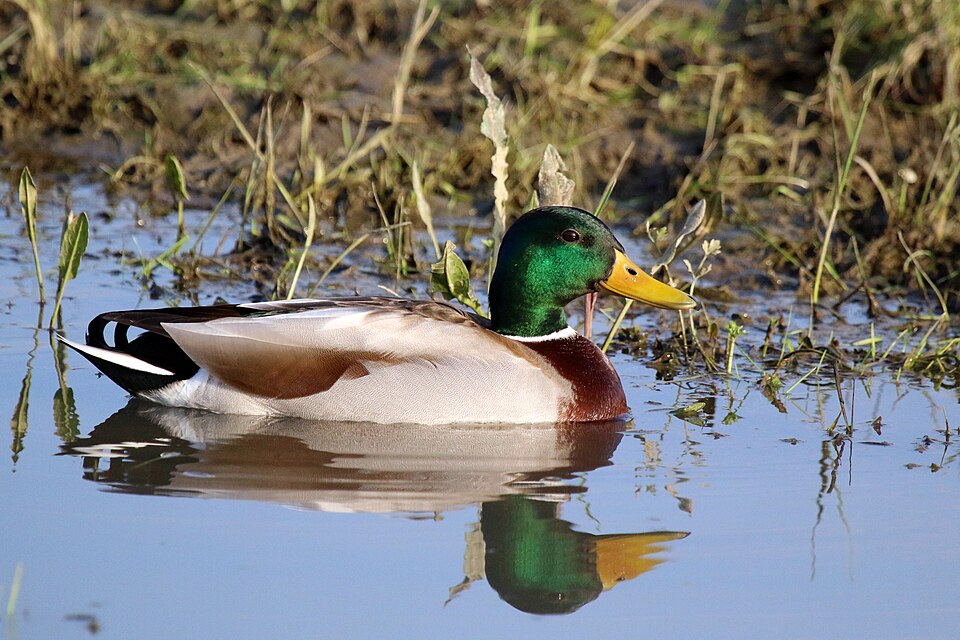
Mallard (Anas platyrhynchos): a dabbler, feeding at the surface rather than diving.
The facts in one table
| Feeding type | omnivore, generalist forager |
| How it feeds | Dabbles rather than dives: tips forward in the water to take seeds and aquatic vegetation |
| Breeding season | Mainly animal matter: aquatic insect larvae, earthworms, snails and freshwater shrimp |
| Rest of the year | Mostly seeds of native wetland plants and agricultural crops |
| Migration | Largely agricultural seed and grain |
| Better than bread at a pond | Sweetcorn, torn lettuce, oats, seeds and rice |
Source for each row: Cornell Lab of Ornithology (Mallard) and Canal & River Trust.
Sources: Cornell Lab of Ornithology (All About Birds) · Canal & River Trust
Dabbling, not diving
The feeding style is the key to the diet. A mallard does not go under; it tips upside-down at the surface to uproot and eat aquatic plants along with insect larvae and freshwater shrimp, and it also walks the shore picking at vegetation and taking prey off the ground. That restricts it to shallow water and to food in the top layer — which is exactly the band where wetland seeds and invertebrates are.
It also explains why the same species does well on a city pond and on a flooded field. Shallow water with plants in it is the requirement, and a surprising number of human landscapes supply it.
The diet changes three times a year
Cornell describes the breeding season as mainly animal matter — larvae, worms, snails and shrimp — because growing ducklings and laying females need protein. Outside the breeding season the bulk of the diet is seeds, from native wetland plants and from agricultural crops. During migration it tilts further towards seed and grain, the densest energy available. A single "duck diet" answer misses all of that.
Why bread is a bad idea, and what to bring instead
The Canal & River Trust sets out the problem clearly: bread has little nutritional value and fills a duck's stomach so it stops foraging for the food it would naturally eat, which can lead to malnutrition. Uneaten soggy bread makes it worse — it introduces bacteria and mould, and the build-up feeds algae, disease and pests in the water. Throwing bread in also concentrates birds unnaturally in one place, which stresses them and damages the habitat.
If you want to feed ducks at a pond, the Trust's list is short and easy: sweetcorn (tinned, frozen or fresh), lettuce torn into pieces, oats, seeds and rice. Small amounts, on the bank or the water's edge, and only what the birds actually clear.
Sources: Canal & River Trust · U.S. Fish and Wildlife Service
What most people get wrong
- "Bread is fine in moderation." The Canal & River Trust describes bread as having little nutritional value and filling the stomach so the bird stops foraging — plus the mould and algae problem in the water.
- "Ducks dive for their food." Mallards dabble: they tip forward at the surface and do not dive.
- "Ducks are vegetarians." In the breeding season the diet is mainly animal matter — insect larvae, earthworms, snails and freshwater shrimp.
- "Uncooked rice harms birds." The Canal & River Trust lists rice, cooked or uncooked, among the things that are fine to feed.
Sources: Cornell Lab of Ornithology (All About Birds) · Canal & River Trust
Frequently asked questions
- Is bread bad for ducks?
- Yes. The Canal & River Trust says bread has little nutritional value and fills the duck's stomach so it stops foraging naturally, and that uneaten soggy bread introduces bacteria and mould and feeds algae and disease in the water.
- What should I feed ducks instead?
- The Canal & River Trust suggests sweetcorn, torn lettuce, oats, seeds and rice — in small amounts, and only as much as the birds clear.
- Do ducks eat insects?
- Yes. Cornell describes the breeding-season diet as mainly animal matter, including aquatic insect larvae, earthworms, snails and freshwater shrimp.
How to read the numbers
The numbers on “What do ducks eat?” come from the facts table at the top, with the official source alongside.
Where the data comes from
Each section of “What do ducks eat?” names its source (agency, university or breed club) with a verification date.
What this page doesn’t replace
Educational information, not a substitute for a vet, agronomist or specialist assessing your specific case.
Go deeper at the official source
To go deeper than “What do ducks eat?”, the source named below publishes the original document.
Words on this page
Toxicity
A plant’s or substance’s capacity to harm an organism, which varies with the species exposed, the amount ingested and the animal’s size. A plant "toxic to dogs" is not necessarily toxic to humans at the same dose, and the reverse holds too.
Standard definition by ASPCA — Animal Poison Control Center · Toxicity
Life cycle
The sequence of stages an organism passes through from birth to death — for an animal, young, adult and senior; for a plant, germination, growth, flowering and, in annuals, death after setting seed.
Hypoallergenic
A term used for breeds that shed less allergen into the environment, usually because they shed less fur. No dog or cat breed is fully allergen-free: a cat’s main allergen comes from saliva and skin, not only fur, and a very sensitive person can react to any breed.
Standard definition by American Kennel Club · Hypoallergenic
Hemisphere
Half of the globe split by the equator. The seasons flip between the two: when it is winter in the northern hemisphere, it is summer in the southern one, which shifts the pruning, bloom and harvest calendar described on this page.
Dormancy
The period when a plant slows its metabolism and stops visible growth, usually in autumn and winter, to survive cold or drought. Pruning, transplanting or fertilising during dormancy is usually less stressful for the plant than doing it in full growth.
Hardiness zone
A numbered band that ranks a region by the average coldest winter temperature it reaches, used to tell whether a plant survives there outdoors. The reference system is the US one (USDA), from zone 1, coldest, to 13, warmest.
Standard definition by USDA — Agricultural Research Service, Plant Hardiness Zone Map · Hardiness zone
Sources
- Mallard — Life History — Cornell Lab of Ornithology (All About Birds). Checked on 2026-10-07.
- Why is bread bad for ducks? / What do ducks eat — Canal & River Trust. Checked on 2026-10-07.
- The Hidden Harm in Feeding Your Local Wildlife — U.S. Fish and Wildlife Service. Checked on 2026-10-07.