What do bats eat?
The bats most people mean are insect eaters, and they eat an enormous amount: the National Park Service puts it at half their body weight in insects a night, with nursing females known to eat up to 110% of their body weight. The part that usually gets left out is what they prefer. A little brown bat can catch up to 600 mosquitoes an hour, but in the wild it has options, and the NPS notes most prefer nutritionally superior moths, spiders and beetles.
Updated on 2026-10-07.
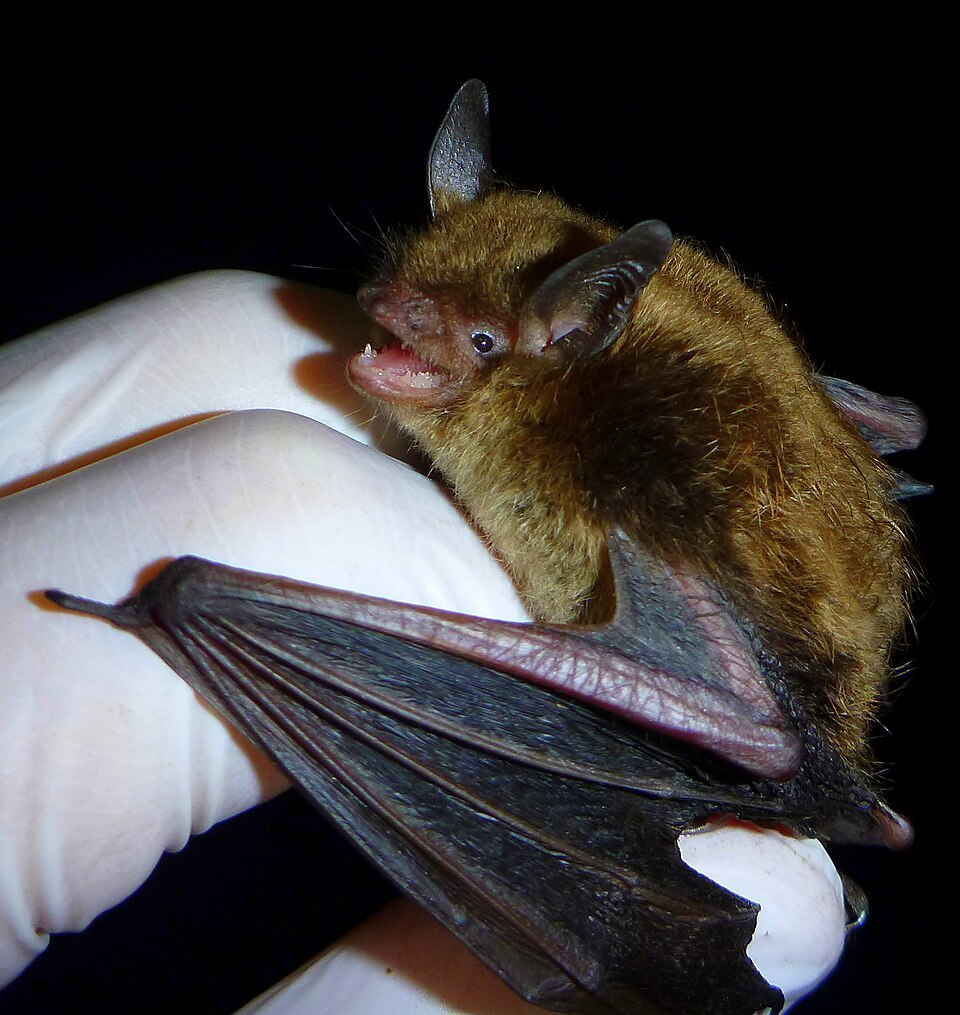
Little brown bat (Myotis lucifugus), the species behind the "600 mosquitoes an hour" figure.
The facts in one table
| Feeding type | insectivore (for the species discussed here) |
| Preferred prey | Moths, spiders and beetles — nutritionally better than mosquitoes |
| Mosquitoes | One little brown bat can catch up to 600 an hour, but it is not what they usually choose |
| Colony scale | A colony can eat hundreds of thousands of insects in an hour |
| Economic value in the US | More than $3.7 billion a year in pest control |
| Eaten per day | 50–110 % of body weight |
Source for each row: U.S. National Park Service, bats subject pages.
Sources: U.S. National Park Service · U.S. National Park Service
The mosquito number, and where it came from
The claim that a bat eats hundreds or thousands of mosquitoes a night is everywhere, and the NPS explains its origin: most of those claims trace back to a single 1960 study that released bats into a room full of mosquitoes. In a room with nothing else on offer, a bat will indeed eat mosquitoes at a remarkable rate. In a field with moths, beetles and spiders available, it generally will not — a moth is simply a better meal per unit of effort.
This is worth getting right, because "put up a bat box and your mosquitoes will disappear" sets people up for disappointment and then for dismissing bats altogether. The real case for bats is bigger than mosquitoes and does not need the exaggeration.
Sources: U.S. National Park Service · U.S. National Park Service
The scale that actually matters
Individually, half a body weight in insects a night is impressive; collectively it is agricultural infrastructure. The NPS notes that a colony of bats can eat hundreds of thousands of insects in an hour, and values insect-eating bats in the United States at more than $3.7 billion a year in pest control. That figure is the honest headline: not a mosquito count, but crop protection at a national scale, delivered for free every night.
Source: U.S. National Park Service
Not all bats eat insects
Worldwide the group is far more varied than the insect-eaters of temperate gardens: there are bats that live on fruit, on nectar, on pollen, on fish, and a very small number on blood. Fruit and nectar bats are major pollinators and seed dispersers in the tropics. So "what do bats eat" has a geographic answer as much as a biological one, and the species in your attic is almost certainly an insect eater.
Diet also shapes the calendar. An insect eater in a temperate climate has no food at all for months, which is why hibernation and long-distance movement are part of the picture — and why anything that disturbs a hibernating colony is costly in a way that disturbing a fruit bat in the tropics is not.
Source: U.S. National Park Service
What most people get wrong
- "Bats eat thousands of mosquitoes every night." The NPS traces that to a single 1960 experiment in a mosquito-filled room; given a choice, bats prefer moths, spiders and beetles.
- "A bat box will clear your garden of mosquitoes." It will not. The pest-control value of bats is real but it is measured across whole landscapes, not one back garden.
- "All bats drink blood." Three species out of well over a thousand feed on blood; most eat insects, fruit or nectar.
Sources: U.S. National Park Service · U.S. National Park Service
Frequently asked questions
- Do bats eat mosquitoes?
- They can — one little brown bat can catch up to 600 mosquitoes an hour — but the NPS notes that in the wild most prefer nutritionally superior moths, spiders and beetles.
- How much does a bat eat in a night?
- About half its body weight in insects, with nursing females known to eat up to 110% of their body weight, according to the National Park Service.
- Are insect-eating bats economically important?
- Yes. The NPS puts the value of bats that eat insects at more than $3.7 billion a year in pest control in the United States.
How to read the numbers
The numbers on “What do bats eat?” come from the facts table at the top, with the official source alongside.
Where the data comes from
Each section of “What do bats eat?” names its source (agency, university or breed club) with a verification date.
What this page doesn’t replace
Educational information, not a substitute for a vet, agronomist or specialist assessing your specific case.
Words on this page
Toxicity
A plant’s or substance’s capacity to harm an organism, which varies with the species exposed, the amount ingested and the animal’s size. A plant "toxic to dogs" is not necessarily toxic to humans at the same dose, and the reverse holds too.
Standard definition by ASPCA — Animal Poison Control Center · Toxicity
Life cycle
The sequence of stages an organism passes through from birth to death — for an animal, young, adult and senior; for a plant, germination, growth, flowering and, in annuals, death after setting seed.
Hypoallergenic
A term used for breeds that shed less allergen into the environment, usually because they shed less fur. No dog or cat breed is fully allergen-free: a cat’s main allergen comes from saliva and skin, not only fur, and a very sensitive person can react to any breed.
Standard definition by American Kennel Club · Hypoallergenic
Hemisphere
Half of the globe split by the equator. The seasons flip between the two: when it is winter in the northern hemisphere, it is summer in the southern one, which shifts the pruning, bloom and harvest calendar described on this page.
Dormancy
The period when a plant slows its metabolism and stops visible growth, usually in autumn and winter, to survive cold or drought. Pruning, transplanting or fertilising during dormancy is usually less stressful for the plant than doing it in full growth.
Formative pruning vs. maintenance pruning
Formative pruning happens in a plant’s first years and sets the permanent shape of the main branches; maintenance pruning is yearly, removes dead, diseased or crossing branches, and does not change the plant’s architecture. Mixing the two up is the most common reason a fruit tree fails to bear fruit.
Sources
- All About Bats / Benefits of Bats — U.S. National Park Service. Checked on 2026-10-07.
- NETN Species Spotlight — Little Brown Bat — U.S. National Park Service. Checked on 2026-10-07. Explica por que o número de "mosquitos por hora" é citado fora de contexto.