Smartest dog breeds
The honest answer is that there is no scientific ranking of dog intelligence, and the best available study explains why. Researchers at the University of Helsinki tested 1,002 dogs from 13 breeds in the smartDOG battery and published the results in Scientific Reports in 2022. They found significant breed differences in some abilities — and, importantly, no significant differences in the tasks measuring memory or logical reasoning.
Updated on 2026-10-07.
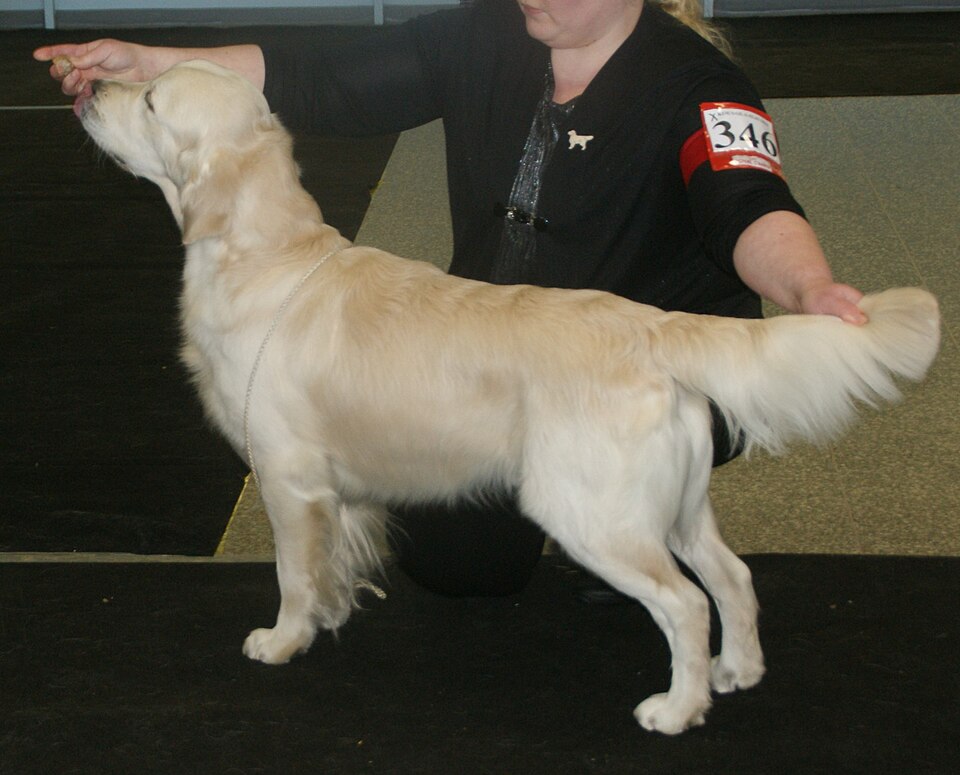
Attention to a human is a measurable trait — and it is not the same thing as intelligence.
The facts in one table
| Breed | Size | Height | Life expectancy |
|---|---|---|---|
| Border Collie | medium | ≤ 53 cm | 12.1 years |
| Shetland Sheepdog | medium | 35.5–37 cm | — |
| Labrador Retriever | large | 55–57 cm | 11.77 years |
| Golden Retriever | large | 51–61 cm | — |
| German Shepherd Dog | large | 58–63 cm | 10.16 years |
The breeds listed here are ones compared in the smartDOG cognitive test battery and covered on this site; the measurements are from their official standards.
Sources: University of Helsinki / Scientific Reports · Royal Kennel Club
What the study measured, and what it found
The battery was not a general intelligence test, because there is no agreed one for dogs. It tested specific, separable abilities: understanding human communicative gestures, following a human's misleading gesture, spatial problem-solving in a V-shaped detour task, inhibitory control in a cylinder test, and persistence and human-directed behaviour during an unsolvable task. Breeds also differed in behaviour towards an unfamiliar person, activity level and exploration of a new environment.
The significant breed differences showed up in those tasks. Memory and logical reasoning did not differ significantly between breeds — which is exactly the opposite of what a single intelligence ranking implies. A breed can be unusually good at reading a human gesture and unremarkable at remembering where something was hidden, and those are different things.
Why the famous ranking is not evidence
The lists that circulate online almost all descend from one source: a popular book that ranked breeds mainly by how quickly they learned obedience commands and how reliably they obeyed them. That is a reasonable measure of trainability in a working context and a poor measure of cognition. It rewards a dog that is motivated to work with a human and penalises an independent one — which is why breeds developed to make decisions alone, such as scent hounds and livestock guardians, sit low on such lists despite being perfectly capable animals.
The Helsinki work shows what a careful measurement looks like instead: separate traits, measured separately, in a large sample, with the result that some differ by breed and some do not. That is less satisfying than a top-ten list and much more useful.
What to use instead when choosing a dog
If what you want is a dog that learns quickly and works with you, the trait to look for is not intelligence but motivation to engage with a human — the thing the Helsinki battery probed with its gesture and unsolvable-task trials. Breeds developed to take direction at a distance, like the herding breeds, tend to score high on that. Breeds developed to work independently do not, and that is a design feature rather than a deficit.
It is also worth remembering that within-breed variation is large. The study found breed-level differences on average; it did not find that every Border Collie outperforms every Labrador. For an individual animal, what it has been taught and how it is motivated will swamp any breed effect.
What most people get wrong
- "Science has ranked dog breeds by IQ." It has not. The Helsinki study found breed differences in some specific traits and none in memory or logical reasoning.
- "The famous top-ten list is research." It is based mainly on obedience-command learning, which measures trainability in a working context rather than cognition.
- "An independent breed is a stupid breed." Breeds developed to work without instruction score low on human-directed tasks by design.
- "Breed tells you how clever your dog is." The study measured averages across breeds; variation between individuals of one breed is substantial.
Frequently asked questions
- Is there a scientific ranking of the smartest dog breeds?
- No. The 2022 Scientific Reports study of 1,002 dogs found breed differences in specific abilities such as reading human gestures and inhibitory control, but no significant differences in memory or logical reasoning.
- How many dogs and breeds were in the study?
- 1,002 Finnish dogs from 13 breeds, tested in the smartDOG cognitive battery.
- What does the popular intelligence ranking actually measure?
- Mainly how fast a breed learns obedience commands and how reliably it obeys — trainability in a working context, not general cognition.
How to read the numbers
The numbers on “Smartest dog breeds” come from the facts table at the top, with the official source alongside.
Where the data comes from
Each section of “Smartest dog breeds” names its source (agency, university or breed club) with a verification date.
What this page doesn’t replace
Educational information, not a substitute for a vet, agronomist or specialist assessing your specific case.
Words on this page
Hypoallergenic
A term used for breeds that shed less allergen into the environment, usually because they shed less fur. No dog or cat breed is fully allergen-free: a cat’s main allergen comes from saliva and skin, not only fur, and a very sensitive person can react to any breed.
Standard definition by American Kennel Club · Hypoallergenic
Life cycle
The sequence of stages an organism passes through from birth to death — for an animal, young, adult and senior; for a plant, germination, growth, flowering and, in annuals, death after setting seed.
Toxicity
A plant’s or substance’s capacity to harm an organism, which varies with the species exposed, the amount ingested and the animal’s size. A plant "toxic to dogs" is not necessarily toxic to humans at the same dose, and the reverse holds too.
Standard definition by ASPCA — Animal Poison Control Center · Toxicity
Hemisphere
Half of the globe split by the equator. The seasons flip between the two: when it is winter in the northern hemisphere, it is summer in the southern one, which shifts the pruning, bloom and harvest calendar described on this page.
Hardiness zone
A numbered band that ranks a region by the average coldest winter temperature it reaches, used to tell whether a plant survives there outdoors. The reference system is the US one (USDA), from zone 1, coldest, to 13, warmest.
Standard definition by USDA — Agricultural Research Service, Plant Hardiness Zone Map · Hardiness zone
Dormancy
The period when a plant slows its metabolism and stops visible growth, usually in autumn and winter, to survive cold or drought. Pruning, transplanting or fertilising during dormancy is usually less stressful for the plant than doing it in full growth.
Sources
- Breed differences in social cognition, inhibitory control, and spatial problem-solving ability in the domestic dog (Scientific Reports, 2022) — University of Helsinki / Scientific Reports. Checked on 2026-10-07. 1.002 cães finlandeses na bateria smartDOG; 13 raças comparadas.
- Breed standards — Royal Kennel Club. Checked on 2026-10-07. As medidas de altura e peso citadas vêm do padrão oficial de cada raça; o texto do padrão não é reproduzido aqui.