Dog breeds list
How many dog breeds exist depends entirely on who is counting. The Fédération Cynologique Internationale, the international federation that brings national kennel clubs together, recognises breeds through a nomenclature organised in ten groups, and national clubs each recognise their own list, which is why published totals range from roughly two hundred to well over four hundred. The table below is not that list: it is the 36 breeds covered in detail on this site, with the figures from their official standards.
Updated on 2026-10-07.
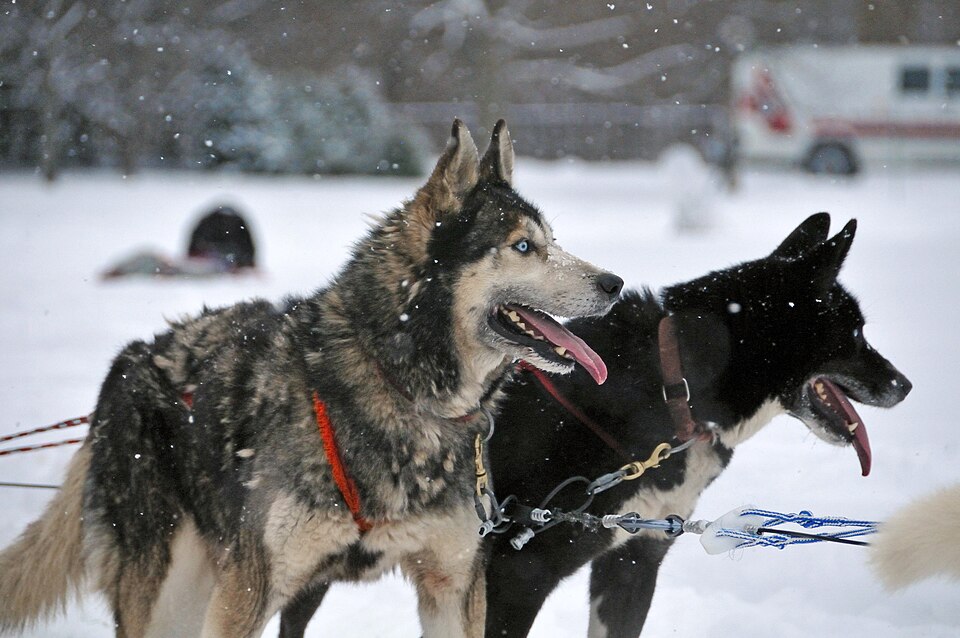
Working breeds: the group records what a dog was developed to do, not its size.
The facts in one table
| Breed | Size | Height | Weight | Coat | Life expectancy |
|---|---|---|---|---|---|
| Chihuahua | toy | — | 1.8–2.7 kg | short | 7.91 years |
| Pomeranian | toy | — | 1.8–2.5 kg | long | — |
| Yorkshire Terrier | toy | — | ≤ 3.2 kg | long | 12.54 years |
| Maltese | toy | ≤ 25 cm | — | long | — |
| Pug | small | — | 6.3–8.1 kg | short | 7.65 years |
| Bichon Frise | small | 23–28 cm | — | curly | — |
| Cavalier King Charles Spaniel | small | — | 5.4–8.2 kg | long | 10.45 years |
| Miniature Dachshund | toy | — | ≤ 5 kg | short | — |
| Toy Poodle | toy | ≤ 28 cm | — | curly | — |
| Miniature Poodle | small | 28–38 cm | — | curly | — |
| Standard Poodle | large | ≥ 38 cm | — | curly | — |
| Shih Tzu | small | ≤ 27 cm | — | long | 11.05 years |
| Lhasa Apso | small | ≤ 25 cm | — | long | — |
| French Bulldog | small | — | 11–12.5 kg | short | 4.53 years |
| Miniature Schnauzer | small | 33–36 cm | — | wiry | — |
| Jack Russell Terrier | small | 25–30 cm | — | wiry | 12.72 years |
| Bedlington Terrier | medium | 41 cm | — | curly | — |
| Soft Coated Wheaten Terrier | medium | 46–49 cm | — | curly | — |
| Beagle | medium | 33–40 cm | — | short | 9.85 years |
| Cocker Spaniel | medium | 38–41 cm | 13–14.5 kg | long | 11.31 years |
| Lagotto Romagnolo | medium | 41–48 cm | — | curly | — |
| Shetland Sheepdog | medium | 35.5–37 cm | — | long | — |
| Border Collie | medium | ≤ 53 cm | — | long | 12.1 years |
| Portuguese Water Dog | medium | 43–57 cm | 19–25 kg | curly | — |
| Labrador Retriever | large | 55–57 cm | — | short | 11.77 years |
| Golden Retriever | large | 51–61 cm | — | long | — |
| German Shepherd Dog | large | 58–63 cm | — | short | 10.16 years |
| Boxer | large | 53–63 cm | 30–32 kg | short | 10.04 years |
| Siberian Husky | large | 51–60 cm | 20–27 kg | long | 9.53 years |
| Alaskan Malamute | large | 58–64 cm | 34–39 kg | long | — |
| Rottweiler | large | 58–69 cm | — | short | — |
| Dobermann | large | 65–69 cm | — | short | — |
| Bernese Mountain Dog | large | 58–70 cm | — | long | — |
| Newfoundland | giant | 66–71 cm | 64–69 kg | long | — |
| St Bernard | giant | ≥ 70 cm | — | long | — |
| Great Dane | giant | ≥ 71 cm | — | short | — |
All figures as stated in the Royal Kennel Club breed standards, with life expectancy at birth from the VetCompass UK life tables where the study covers the breed.
Sources: Royal Kennel Club · Royal Veterinary College — VetCompass · Fédération Cynologique Internationale
Why nobody agrees on the number
A breed is recognised by an organisation, not by nature, so the count is an administrative fact. The FCI maintains a nomenclature in which every recognised breed sits in one of ten groups, with a country of origin and an official standard; the Royal Kennel Club in the UK organises its own recognised breeds into seven groups, and other national clubs differ again. A breed can be recognised in one country and not another, and varieties within a breed are sometimes counted separately and sometimes not.
That is also why the group a breed sits in can look surprising. The Miniature Schnauzer and the Poodle are both in the Utility group in the UK; the Chihuahua is in Toy; the Border Collie is Pastoral. The groups record what the breed was developed to do, not how big it is or how it looks.
Sources: Fédération Cynologique Internationale · Royal Kennel Club
How to read the columns
Height and weight are taken straight from the official standard, including its quirks: some standards give an ideal, some a range, some a minimum, some separate figures for males and females. Where a standard does not specify a measure, the cell holds a dash. The coat column is the standard's own description reduced to a type, and the life expectancy column is the figure from the VetCompass UK life tables for breeds that study measured — it is empty for the rest rather than filled with an estimate.
Treat the whole table as a description of the breed target, not of an individual dog. Standards exist so that judges and breeders have a shared reference; they do not promise that the animal in front of you matches.
Sources: Royal Kennel Club · Royal Veterinary College — VetCompass
Function explains more than appearance
If you read the table from the top, the pattern that emerges is functional rather than visual. The gundogs — Labrador, Golden Retriever, Cocker Spaniel, Lagotto Romagnolo — share a working style and tend towards water-resistant coats. The pastoral breeds share stamina and responsiveness. The working group collects the guarding, draught and sled breeds, which is why it contains both the Great Dane and the Siberian Husky.
This matters when you are choosing, because the group is a better predictor of daily life than the size column. A dog bred to run beside livestock all day will need that outlet whether it weighs 15 kg or 40 kg.
Sources: Royal Kennel Club · Fédération Cynologique Internationale
What most people get wrong
- "There are exactly N dog breeds." The number depends on which organisation you ask, because recognition is administrative and varies by country.
- "Breed groups are size categories." They record original function. The Working group holds both the Great Dane and the Siberian Husky.
- "The standard describes every dog of the breed." It describes a target used by judges and breeders, not a guarantee about an individual animal.
Sources: Fédération Cynologique Internationale · Royal Kennel Club
Frequently asked questions
- How many dog breeds are there?
- There is no single answer. The FCI recognises breeds through its international nomenclature while national kennel clubs maintain their own lists, so published totals range from roughly two hundred to over four hundred depending on the body.
- Where do the heights and weights come from?
- From the official Royal Kennel Club breed standard for each breed, quoted as the figure the standard states.
- Why do some breeds have no life expectancy figure?
- Because the VetCompass UK life tables only cover breeds with enough recorded deaths in the study. We leave the cell empty rather than publish an estimate.
How to read the numbers
The numbers on “Dog breeds list” come from the facts table at the top, with the official source alongside.
Where the data comes from
Each section of “Dog breeds list” names its source (agency, university or breed club) with a verification date.
What this page doesn’t replace
Educational information, not a substitute for a vet, agronomist or specialist assessing your specific case.
Words on this page
Hypoallergenic
A term used for breeds that shed less allergen into the environment, usually because they shed less fur. No dog or cat breed is fully allergen-free: a cat’s main allergen comes from saliva and skin, not only fur, and a very sensitive person can react to any breed.
Standard definition by American Kennel Club · Hypoallergenic
Life cycle
The sequence of stages an organism passes through from birth to death — for an animal, young, adult and senior; for a plant, germination, growth, flowering and, in annuals, death after setting seed.
Toxicity
A plant’s or substance’s capacity to harm an organism, which varies with the species exposed, the amount ingested and the animal’s size. A plant "toxic to dogs" is not necessarily toxic to humans at the same dose, and the reverse holds too.
Standard definition by ASPCA — Animal Poison Control Center · Toxicity
Hemisphere
Half of the globe split by the equator. The seasons flip between the two: when it is winter in the northern hemisphere, it is summer in the southern one, which shifts the pruning, bloom and harvest calendar described on this page.
Hardiness zone
A numbered band that ranks a region by the average coldest winter temperature it reaches, used to tell whether a plant survives there outdoors. The reference system is the US one (USDA), from zone 1, coldest, to 13, warmest.
Standard definition by USDA — Agricultural Research Service, Plant Hardiness Zone Map · Hardiness zone
Dormancy
The period when a plant slows its metabolism and stops visible growth, usually in autumn and winter, to survive cold or drought. Pruning, transplanting or fertilising during dormancy is usually less stressful for the plant than doing it in full growth.
Sources
- Breed standards — Royal Kennel Club. Checked on 2026-10-07. As medidas de altura e peso citadas vêm do padrão oficial de cada raça; o texto do padrão não é reproduzido aqui.
- Life tables of annual life expectancy and mortality for companion dogs in the United Kingdom (Scientific Reports, 2022) — Royal Veterinary College — VetCompass. Checked on 2026-10-07. 30.563 cães que morreram entre 1/1/2016 e 31/7/2020, sob atendimento veterinário primário no Reino Unido.
- FCI Nomenclature of breeds — Fédération Cynologique Internationale. Checked on 2026-10-07.