Hypoallergenic dog breeds
Start with the uncomfortable part: the Asthma and Allergy Foundation of America states plainly that a truly non-allergic dog or cat does not exist. The allergy is to a protein found in the animal's dander, saliva and urine — AAFA is explicit that you are not allergic to the pet's hair, fur or feathers. What the breeds below actually offer is a coat that sheds very little, so less hair carrying that protein ends up on your sofa. That is a real difference, and it is not the same as hypoallergenic.
Updated on 2026-10-07.
Allergy is a medical matter, not a shopping decision. If someone in the household reacts to animals, the step that actually helps is testing and advice from an allergy specialist; for the animal itself, consult a veterinarian.
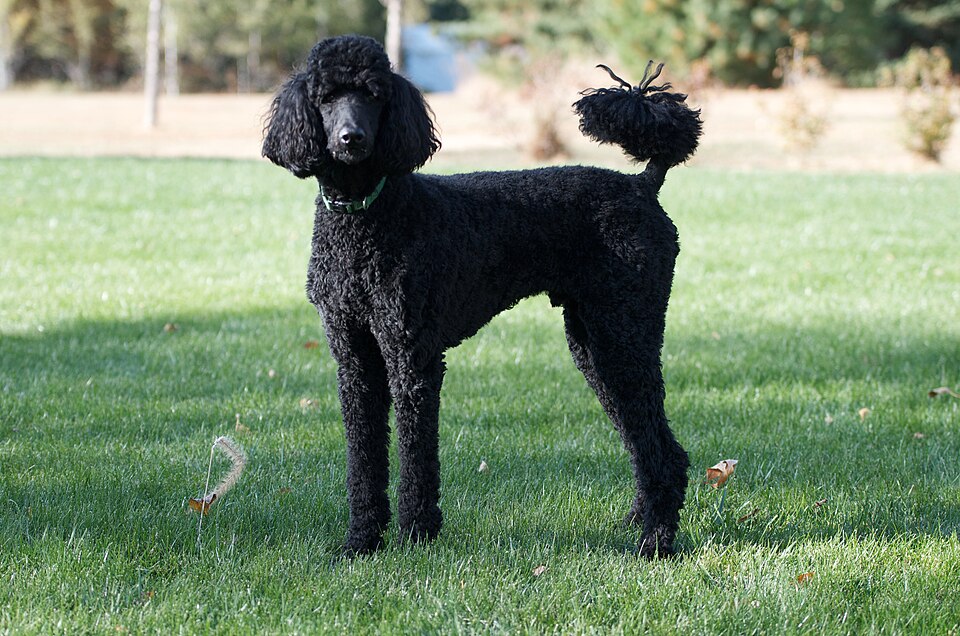
Poodle: the only coat a major breed standard describes as one which does not moult.
The facts in one table
| Breed | Coat | Shedding | Size | Height |
|---|---|---|---|---|
| Standard Poodle | curly | low | large | ≥ 38 cm |
| Miniature Poodle | curly | low | small | 28–38 cm |
| Toy Poodle | curly | low | toy | ≤ 28 cm |
| Bichon Frise | curly | low | small | 23–28 cm |
| Miniature Schnauzer | wiry | low | small | 33–36 cm |
| Portuguese Water Dog | curly | low | medium | 43–57 cm |
| Lagotto Romagnolo | curly | low | medium | 41–48 cm |
| Bedlington Terrier | curly | low | medium | 41 cm |
| Soft Coated Wheaten Terrier | curly | low | medium | 46–49 cm |
| Maltese | long | low | toy | ≤ 25 cm |
| Yorkshire Terrier | long | low | toy | — |
| Shih Tzu | long | low | small | ≤ 27 cm |
| Lhasa Apso | long | low | small | ≤ 25 cm |
Coat type and shedding are read from what each official breed standard says about the coat — for example, whether it describes a dense undercoat or a coat that does not moult.
Sources: Royal Kennel Club · Asthma and Allergy Foundation of America
The allergen is a protein, not hair
This single fact reorganises the whole question. AAFA describes the allergy as a reaction to the protein found in the pet's dander — dead skin cells — along with saliva and urine. Hair is a carrier, not the cause: it collects dander and dried saliva from grooming and then distributes them around the house. A dog with no hair at all still produces dander and still licks itself.
That is why AAFA says a truly non-allergic dog or cat does not exist, and why the word "hypoallergenic" on a breed page is marketing rather than a medical category. A breed can shed less, which reduces one route of exposure. It cannot stop producing the protein.
What the official standards actually say about these coats
The breeds in the table are the ones whose standards describe a coat that behaves differently. The Poodle standard is the clearest case: it describes the breed as distinguished by a type of coat which does not moult. The Portuguese Water Dog standard describes two coat types, both without undercoats. The Maltese standard specifies a coat without woolly undercoat. The Lagotto Romagnolo standard describes a woolly, waterproof coat forming thick ring-shaped curls.
Compare that with what the standards say about the heavy shedders. The German Shepherd standard describes a thick undercoat; the Siberian Husky a double coat with a soft, dense undercoat; the Border Collie an undercoat soft and dense giving good weather resistance. The difference between the two lists is not breeder folklore — it is written into the official descriptions, and it is the honest basis for a low-shedding group.
Source: Royal Kennel Club
Low shedding has a cost: clipping
A coat that does not moult does not stop growing. Poodles, Bichons, Lagotti, Portuguese Water Dogs and Soft Coated Wheaten Terriers all need regular professional clipping, usually every six to ten weeks, plus brushing between appointments or the coat mats against the skin. The hair you are not vacuuming is hair someone has to cut off instead.
The long-coated small breeds in the list — Maltese, Yorkshire Terrier, Shih Tzu, Lhasa Apso — shift the work rather than removing it. Their standards describe long, silky coats that need daily attention. Low shedding is a genuine advantage for some households and a daily chore in all of them.
Source: Royal Kennel Club
If someone in the house is allergic
Choosing a breed is the weakest of the available tools. Testing to find out what the person is actually reacting to comes first, because "allergic to dogs" is often allergic to several things at once, and the plan depends on which. Spending time with the specific animal before committing tells you more than any breed description, since individual dogs vary in how much allergen they shed into a room.
Allergy is a medical matter, not a shopping decision. If someone in the household reacts to animals, the step that actually helps is testing and advice from an allergy specialist; for the animal itself, consult a veterinarian.
What most people get wrong
- "Some dogs are hypoallergenic." AAFA: a truly non-allergic dog or cat does not exist.
- "I am allergic to dog hair." AAFA is explicit that you are not allergic to the hair or fur, but to proteins in dander, saliva and urine.
- "Hairless or low-shedding means allergen-free." Dander and saliva are produced regardless of how much the coat sheds.
- "A non-shedding coat is less work." It needs clipping every six to ten weeks plus brushing, because the hair keeps growing instead of falling out.
Sources: Asthma and Allergy Foundation of America · Royal Kennel Club
Frequently asked questions
- Is any dog breed truly hypoallergenic?
- No. The Asthma and Allergy Foundation of America states that a truly non-allergic dog or cat does not exist, because the allergen is a protein in dander, saliva and urine rather than in hair.
- Which dog breeds shed the least?
- The breeds whose official standards describe a non-moulting or undercoat-free coat: Poodle in all three sizes, Bichon Frise, Portuguese Water Dog, Lagotto Romagnolo, Bedlington Terrier, Soft Coated Wheaten Terrier and Miniature Schnauzer, plus the long single-coated small breeds such as the Maltese.
- Do low-shedding dogs need more grooming?
- Generally yes. A coat that does not moult keeps growing, so it needs clipping every six to ten weeks and brushing in between to prevent matting.
- What should I do before getting a dog if I have allergies?
- Get tested to find out what you actually react to, spend time with the individual animal, and take advice from an allergy specialist rather than from a breed list.
How to read the numbers
The numbers on “Hypoallergenic dog breeds” come from the facts table at the top, with the official source alongside.
Where the data comes from
Each section of “Hypoallergenic dog breeds” names its source (agency, university or breed club) with a verification date.
What this page doesn’t replace
Educational information, not a substitute for a vet, agronomist or specialist assessing your specific case.
Go deeper at the official source
To go deeper than “Hypoallergenic dog breeds”, the source named below publishes the original document.
Words on this page
Hypoallergenic
A term used for breeds that shed less allergen into the environment, usually because they shed less fur. No dog or cat breed is fully allergen-free: a cat’s main allergen comes from saliva and skin, not only fur, and a very sensitive person can react to any breed.
Standard definition by American Kennel Club · Hypoallergenic
Life cycle
The sequence of stages an organism passes through from birth to death — for an animal, young, adult and senior; for a plant, germination, growth, flowering and, in annuals, death after setting seed.
Toxicity
A plant’s or substance’s capacity to harm an organism, which varies with the species exposed, the amount ingested and the animal’s size. A plant "toxic to dogs" is not necessarily toxic to humans at the same dose, and the reverse holds too.
Standard definition by ASPCA — Animal Poison Control Center · Toxicity
Hemisphere
Half of the globe split by the equator. The seasons flip between the two: when it is winter in the northern hemisphere, it is summer in the southern one, which shifts the pruning, bloom and harvest calendar described on this page.
Hardiness zone
A numbered band that ranks a region by the average coldest winter temperature it reaches, used to tell whether a plant survives there outdoors. The reference system is the US one (USDA), from zone 1, coldest, to 13, warmest.
Standard definition by USDA — Agricultural Research Service, Plant Hardiness Zone Map · Hardiness zone
Dormancy
The period when a plant slows its metabolism and stops visible growth, usually in autumn and winter, to survive cold or drought. Pruning, transplanting or fertilising during dormancy is usually less stressful for the plant than doing it in full growth.
Sources
- Breed standards — Royal Kennel Club. Checked on 2026-10-07. As medidas de altura e peso citadas vêm do padrão oficial de cada raça; o texto do padrão não é reproduzido aqui.
- Pet Allergy (Dog and Cat Allergies) — Asthma and Allergy Foundation of America. Checked on 2026-10-07. Afirma que "um cão ou gato realmente não alergênico não existe" e que a alergia é à proteína da caspa, saliva e urina — não ao pelo.