Dog breeds for apartments
No kennel club publishes an "apartment breeds" list, so any page that gives you one is giving you an opinion. What can be stated as fact is the measurements: the breeds below are the small breeds in our dataset whose official standards put them under about 38 cm or 13 kg and which were not developed as working or sporting dogs needing hours of daily running. The criterion is ours, and it is the only honest way to present this.
Updated on 2026-10-07.
Breed-level figures describe populations, not individuals. Before choosing a breed with known health risks, discuss what care it involves with a veterinarian.
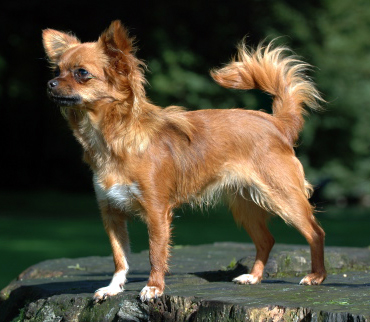
Weight settles the logistics of a flat; exercise need and barking settle everything else.
The facts in one table
| Breed | Size | Height | Weight | Shedding |
|---|---|---|---|---|
| Cavalier King Charles Spaniel | small | — | 5.4–8.2 kg | moderate |
| French Bulldog | small | — | 11–12.5 kg | moderate |
| Pug | small | — | 6.3–8.1 kg | moderate |
| Shih Tzu | small | ≤ 27 cm | — | low |
| Maltese | toy | ≤ 25 cm | — | low |
| Bichon Frise | small | 23–28 cm | — | low |
| Miniature Poodle | small | 28–38 cm | — | low |
| Toy Poodle | toy | ≤ 28 cm | — | low |
| Yorkshire Terrier | toy | — | ≤ 3.2 kg | low |
| Chihuahua | toy | — | 1.8–2.7 kg | moderate |
| Lhasa Apso | small | ≤ 25 cm | — | low |
Measurements from the official breed standards. The selection criterion is ours and is stated on the page; it is not a ranking published by any kennel club.
Source: Royal Kennel Club
Three things matter in a flat, and size is the least of them
Noise comes first. A dog that barks at every footstep in a corridor is a problem in a flat in a way it is not in a detached house, and barking tendency is not predicted by weight at all. Second is exercise need, which comes from what the breed was developed to do: a working terrier in a 25 cm body needs far more than a Cavalier King Charles Spaniel twice its weight. Third is time alone, because flats are usually in cities and city dogs are often left while people work.
Size matters mainly for the mechanics — stairs, lifts, a hallway two people can pass in, the car. It is a real constraint, just a smaller one than most lists imply. A calm large dog is easier in a flat than an under-exercised small one.
Source: Royal Kennel Club
Shedding in a small space
In a small flat, coat type stops being cosmetic. The shedding column in the table is read from what each official standard says about the coat — whether it describes a dense undercoat, no undercoat, or a coat that does not moult. The Maltese standard, for instance, specifies a coat without woolly undercoat; the Poodle standard describes a coat which does not moult. Those breeds put much less hair into a confined space.
The trade is grooming. Non-moulting coats need clipping every six to ten weeks, and the long-coated small breeds need daily brushing. In a flat that is usually an acceptable swap, but it is a swap and not a saving.
Source: Royal Kennel Club
One health note worth knowing before you choose
Two popular small flat dogs sit at the bottom of the measured life-expectancy table: the VetCompass UK study gives the French Bulldog 4.53 years and the Pug 7.65 years, against 11.23 years for dogs overall. Both are breeds selected for a flattened face. That is not a reason nobody should have one; it is a reason to go in knowing the figure, and to talk to a veterinarian about what caring for one involves before rather than after.
Breed-level figures describe populations, not individuals. Before choosing a breed with known health risks, discuss what care it involves with a veterinarian.
What most people get wrong
- "Small dog, small needs." Several small breeds in this size range were bred to work and need substantial daily exercise.
- "A flat is unfair to a dog." What is unfair is too little exercise, company and stimulation. Those depend on the owner's routine, not the floor area.
- "There is an official list of apartment breeds." There is not. Kennel clubs publish standards, not lifestyle rankings.
- "A garden replaces walks." It does not. Dogs exercise when they go somewhere, not when they are let out.
Source: Royal Kennel Club
Frequently asked questions
- What size dog fits a flat?
- Size is mostly about logistics — stairs, lifts, the car. Exercise need, barking and tolerance of being alone matter more, and none of those is set by weight.
- Which small breeds shed least?
- Those whose standards describe a non-moulting or undercoat-free coat, such as the Poodle in Toy and Miniature sizes, the Bichon Frise and the Maltese.
- Is a Jack Russell a good flat dog?
- Its standard describes a working terrier of 25–30 cm. It fits physically and needs a great deal more activity than its size suggests.
How to read the numbers
The numbers on “Dog breeds for apartments” come from the facts table at the top, with the official source alongside.
Where the data comes from
Each section of “Dog breeds for apartments” names its source (agency, university or breed club) with a verification date.
What this page doesn’t replace
Educational information, not a substitute for a vet, agronomist or specialist assessing your specific case.
Go deeper at the official source
To go deeper than “Dog breeds for apartments”, the source named below publishes the original document.
Words on this page
Hypoallergenic
A term used for breeds that shed less allergen into the environment, usually because they shed less fur. No dog or cat breed is fully allergen-free: a cat’s main allergen comes from saliva and skin, not only fur, and a very sensitive person can react to any breed.
Standard definition by American Kennel Club · Hypoallergenic
Life cycle
The sequence of stages an organism passes through from birth to death — for an animal, young, adult and senior; for a plant, germination, growth, flowering and, in annuals, death after setting seed.
Toxicity
A plant’s or substance’s capacity to harm an organism, which varies with the species exposed, the amount ingested and the animal’s size. A plant "toxic to dogs" is not necessarily toxic to humans at the same dose, and the reverse holds too.
Standard definition by ASPCA — Animal Poison Control Center · Toxicity
Hemisphere
Half of the globe split by the equator. The seasons flip between the two: when it is winter in the northern hemisphere, it is summer in the southern one, which shifts the pruning, bloom and harvest calendar described on this page.
Hardiness zone
A numbered band that ranks a region by the average coldest winter temperature it reaches, used to tell whether a plant survives there outdoors. The reference system is the US one (USDA), from zone 1, coldest, to 13, warmest.
Standard definition by USDA — Agricultural Research Service, Plant Hardiness Zone Map · Hardiness zone
Formative pruning vs. maintenance pruning
Formative pruning happens in a plant’s first years and sets the permanent shape of the main branches; maintenance pruning is yearly, removes dead, diseased or crossing branches, and does not change the plant’s architecture. Mixing the two up is the most common reason a fruit tree fails to bear fruit.
Sources
- Breed standards — Royal Kennel Club. Checked on 2026-10-07. As medidas de altura e peso citadas vêm do padrão oficial de cada raça; o texto do padrão não é reproduzido aqui.
- Life tables of annual life expectancy and mortality for companion dogs in the United Kingdom (Scientific Reports, 2022) — Royal Veterinary College — VetCompass. Checked on 2026-10-07. 30.563 cães que morreram entre 1/1/2016 e 31/7/2020, sob atendimento veterinário primário no Reino Unido.