Plants toxic to dogs
The plant to know about first is the sago palm. The ASPCA gives its toxic principle as cycasin and its effects as vomiting, melena, jaundice, increased thirst, haemorrhagic gastroenteritis, bruising, coagulopathy, liver damage, liver failure and death — and reports that up to 50% of sago palm ingestion cases are fatal, with the seeds the most concentrated part and as few as one or two enough to kill. Oleander and lily of the valley follow, both working on the heart.
Updated on 2026-10-07.
If your animal has eaten part of a plant, do not wait for symptoms and do not try to treat it at home: consult a veterinarian straight away, or call the ASPCA Animal Poison Control Center on (888) 426-4435 or the Pet Poison Helpline on (855) 764-7661.
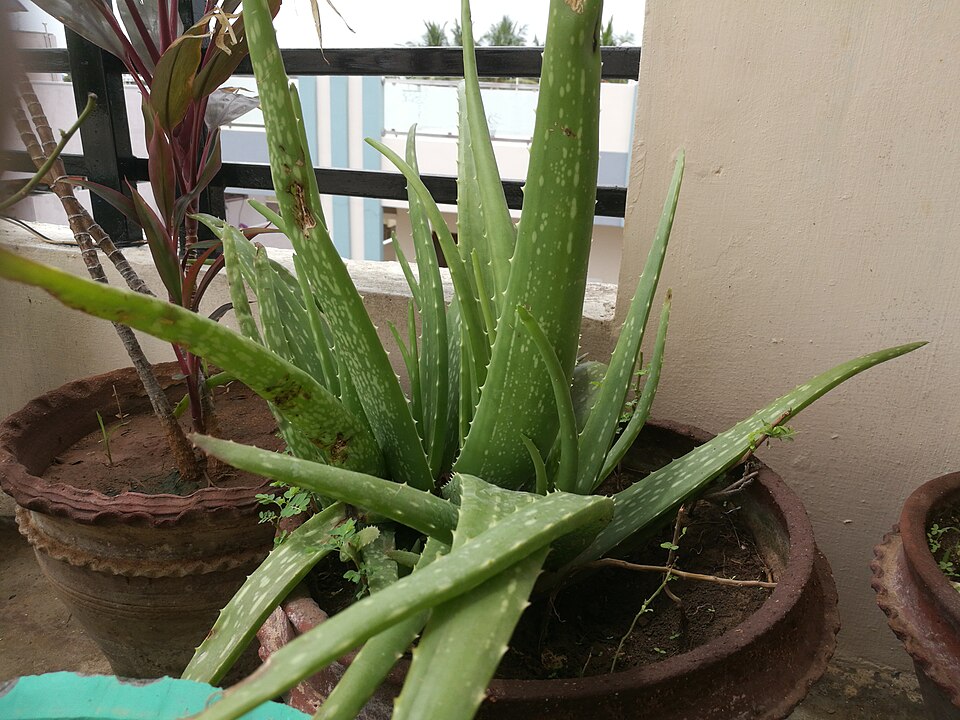
Aloe vera: saponins and anthraquinones, listed by the ASPCA as toxic to dogs and cats.
The facts in one table
| Plant | Scientific name | Toxic principle | What it does |
|---|---|---|---|
| Lily of the valley | Convallaria majalis | cardenolídeos (convalarina e outros) | potentially fatal |
| Sago palm / cycad | Cycas revoluta | cicasina | potentially fatal |
| Oleander | Nerium oleander | glicosídeos cardíacos | potentially fatal |
| Azalea and rhododendron | Rhododendron spp. | graianotoxina | serious |
| Aloe vera | Aloe vera | saponinas e antraquinonas | digestive upset |
| Tulip | Tulipa spp. | tulipalina A e B | digestive upset |
| Dieffenbachia / dumb cane | Dieffenbachia spp. | oxalatos de cálcio insolúveis e enzima proteolítica | mouth irritation |
| Golden pothos / devil's ivy | Epipremnum aureum | oxalatos de cálcio insolúveis | mouth irritation |
| Monstera / Swiss cheese plant | Monstera deliciosa | oxalatos de cálcio insolúveis | mouth irritation |
Toxic principles as published by the ASPCA Animal Poison Control Center and the Pet Poison Helpline. The ASPCA states its own list is not meant to be all-inclusive.
Sources: ASPCA Animal Poison Control Center · ASPCA Animal Poison Control Center · ASPCA · ASPCA Animal Poison Control Center · ASPCA
Sago palm: the one that kills dogs
The sago palm, Cycas revoluta, is a cycad rather than a true palm, and it is sold as an ornamental in warm regions and as a houseplant elsewhere. The ASPCA describes vomiting as very common after exposure, developing within minutes of ingestion, with liver failure potentially developing within three days. Its own figure — up to half of ingestion cases fatal — is the starkest number on any of these pages, and survival chances improve with early intervention, which is the whole argument for calling immediately rather than waiting.
Concentration matters here. The seeds hold the highest level of toxin and as few as one or two can be fatal, which turns a dropped seed on a patio into a genuine emergency for a dog that investigates with its mouth. For a household with a dog, the only reliable approach is not to have the plant.
If your animal has eaten part of a plant, do not wait for symptoms and do not try to treat it at home: consult a veterinarian straight away, or call the ASPCA Animal Poison Control Center on (888) 426-4435 or the Pet Poison Helpline on (855) 764-7661.
Sources: ASPCA Animal Poison Control Center · ASPCA
Oleander and lily of the valley: cardiac plants
Oleander, Nerium oleander, is listed by the ASPCA as toxic to dogs, cats and horses, with cardiac glycosides as its toxic principle and effects including drooling, abdominal pain, diarrhoea, colic, depression and death. It is a common hedging and roadside plant in Mediterranean and subtropical climates, which is exactly where a dog is most likely to meet it.
Lily of the valley, Convallaria majalis, works on the same system through cardenolides including convallarin, with the ASPCA listing vomiting, irregular heartbeat, low blood pressure, disorientation, coma and seizures. Both are plants where the problem is not a sore mouth but a heart rhythm, and both belong in the same category as the sago palm for urgency.
Sources: ASPCA Animal Poison Control Center · ASPCA Animal Poison Control Center
The garden and houseplant tier
Azalea and rhododendron come next, with grayanotoxin as the toxic principle and effects the ASPCA lists as vomiting, diarrhoea, weakness and cardiac failure. Tulips follow, with tulipalin A and B: the ASPCA notes that tulips and tulip bulbs can cause significant stomach upset, depression and possible intestinal obstruction if large bulbs are swallowed — which makes a dog that digs up a newly planted bed a specific risk in autumn.
At the bottom sit aloe vera, with saponins and anthraquinones causing vomiting, lethargy, diarrhoea and in some cases red-coloured urine, and the calcium-oxalate houseplants — monstera, pothos and dieffenbachia — whose effect is painful mouth irritation rather than systemic illness. Lower severity still means a phone call; it does not mean nothing happened.
Sources: ASPCA Animal Poison Control Center · ASPCA Animal Poison Control Center · ASPCA Animal Poison Control Center · Pet Poison Helpline · ASPCA Animal Poison Control Center
What to do
Call first, and bring the plant. Identification is what determines whether this is a sore mouth or a liver emergency, and a photo of the leaf and the whole plant is more use than a description. Do not try anything at home: with the sago palm the ASPCA's own point is that early veterinary intervention improves survival, and time spent on home remedies is time taken from that.
- ASPCA Animal Poison Control Center: (888) 426-4435
- Pet Poison Helpline: (855) 764-7661
If your animal has eaten part of a plant, do not wait for symptoms and do not try to treat it at home: consult a veterinarian straight away, or call the ASPCA Animal Poison Control Center on (888) 426-4435 or the Pet Poison Helpline on (855) 764-7661.
Sources: ASPCA Animal Poison Control Center · ASPCA
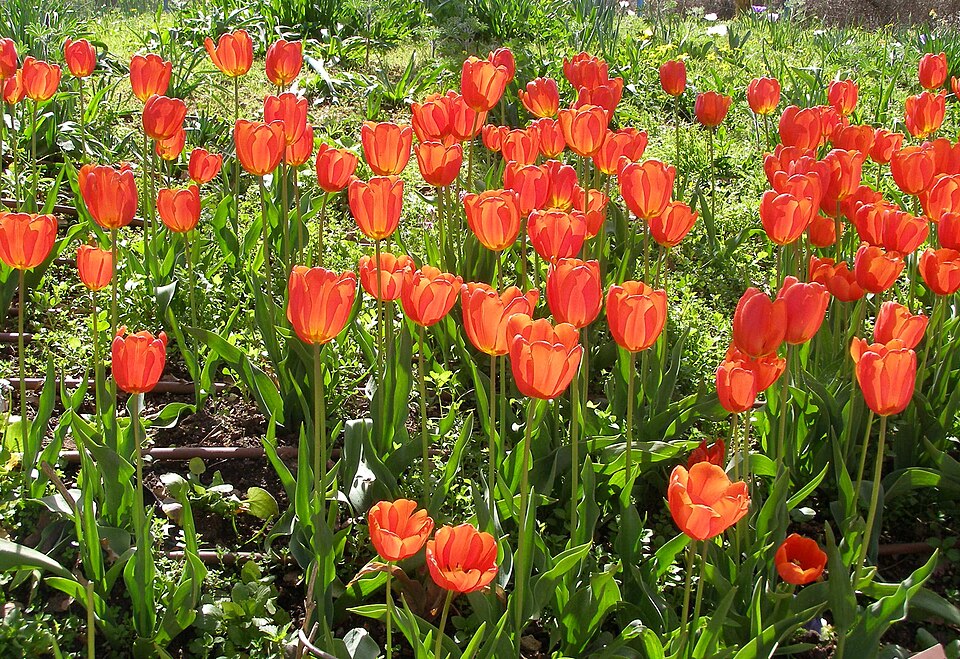
Tulips: tulipalin A and B; the bulbs are the part that causes the most trouble.
What most people get wrong
- "A sago palm is just a palm." It is a cycad, and the ASPCA reports up to 50% of ingestion cases as fatal, with one or two seeds potentially enough.
- "If the dog seems fine, it is fine." With the sago palm, liver failure can develop within three days of an ingestion that looked minor.
- "Only the bulb of a tulip matters." The ASPCA lists tulips and tulip bulbs together; large bulbs also raise the risk of intestinal obstruction.
- "Aloe vera is medicinal, so it is safe." The ASPCA lists saponins and anthraquinones as its toxic principles for dogs and cats.
Sources: ASPCA Animal Poison Control Center · ASPCA Animal Poison Control Center · ASPCA Animal Poison Control Center
Frequently asked questions
- What is the most dangerous plant for dogs?
- The sago palm. The ASPCA reports up to 50% of ingestion cases as fatal, with the seeds the most toxic part and as few as one or two potentially enough.
- Are tulips toxic to dogs?
- Yes. The ASPCA gives tulipalin A and B as the toxic principles and lists significant stomach upset, depression and possible intestinal obstruction if large bulbs are swallowed.
- What should I do if my dog ate a toxic plant?
- Call your veterinarian or a poison control centre immediately — the ASPCA Animal Poison Control Center on (888) 426-4435 or the Pet Poison Helpline on (855) 764-7661 — and take the plant or a photo with you.
How to read the numbers
The numbers on “Plants toxic to dogs” come from the facts table at the top, with the official source alongside.
Where the data comes from
Each section of “Plants toxic to dogs” names its source (agency, university or breed club) with a verification date.
What this page doesn’t replace
Educational information, not a substitute for a vet, agronomist or specialist assessing your specific case.
Go deeper at the official source
To go deeper than “Plants toxic to dogs”, the source named below publishes the original document.
Words on this page
Toxicity
A plant’s or substance’s capacity to harm an organism, which varies with the species exposed, the amount ingested and the animal’s size. A plant "toxic to dogs" is not necessarily toxic to humans at the same dose, and the reverse holds too.
Standard definition by ASPCA — Animal Poison Control Center · Toxicity
Hypoallergenic
A term used for breeds that shed less allergen into the environment, usually because they shed less fur. No dog or cat breed is fully allergen-free: a cat’s main allergen comes from saliva and skin, not only fur, and a very sensitive person can react to any breed.
Standard definition by American Kennel Club · Hypoallergenic
Life cycle
The sequence of stages an organism passes through from birth to death — for an animal, young, adult and senior; for a plant, germination, growth, flowering and, in annuals, death after setting seed.
Dormancy
The period when a plant slows its metabolism and stops visible growth, usually in autumn and winter, to survive cold or drought. Pruning, transplanting or fertilising during dormancy is usually less stressful for the plant than doing it in full growth.
Hemisphere
Half of the globe split by the equator. The seasons flip between the two: when it is winter in the northern hemisphere, it is summer in the southern one, which shifts the pruning, bloom and harvest calendar described on this page.
Formative pruning vs. maintenance pruning
Formative pruning happens in a plant’s first years and sets the permanent shape of the main branches; maintenance pruning is yearly, removes dead, diseased or crossing branches, and does not change the plant’s architecture. Mixing the two up is the most common reason a fruit tree fails to bear fruit.
Sources
- Toxic and Non-Toxic Plants List — ASPCA Animal Poison Control Center. Checked on 2026-10-07. A própria ASPCA avisa que a lista "não pretende ser completa", e sim reunir as plantas mais encontradas.
- Toxic and Non-toxic Plants: Sago Palm — ASPCA Animal Poison Control Center. Checked on 2026-10-07.
- The Dangers of the Sago Palm — ASPCA. Checked on 2026-10-07.
- Toxic and Non-toxic Plants: Oleander — ASPCA Animal Poison Control Center. Checked on 2026-10-07.
- Top 10 Toxic Plants for Pets: What to Look Out For — ASPCA. Checked on 2026-10-07.
- Toxic and Non-toxic Plants: Lily of the Valley — ASPCA Animal Poison Control Center. Checked on 2026-10-07.
- Toxic and Non-toxic Plants: Azalea — ASPCA Animal Poison Control Center. Checked on 2026-10-07.
- Toxic and Non-toxic Plants: Tulip — ASPCA Animal Poison Control Center. Checked on 2026-10-07.
- Toxic and Non-toxic Plants: Aloe — ASPCA Animal Poison Control Center. Checked on 2026-10-07.
- Aloe Vera Is Toxic To Dogs — Pet Poison Helpline. Checked on 2026-10-07.
- Toxic and Non-toxic Plants: Cutleaf Philodendron (Monstera deliciosa) — ASPCA Animal Poison Control Center. Checked on 2026-10-07.