How long do parrots live?
There is no single figure, and the honest range is enormous. The San Diego Zoo Wildlife Alliance puts parrot lifespan at 10 to 60 years depending on species, with up to 60 years reached in human care. That is a six-fold spread inside one bird family, which makes "how long do parrots live" a question that cannot be answered until you name the species.
Updated on 2026-10-07.
These are population figures, not a prediction for one animal, and nothing here is a care plan. For anything about a specific animal's health, weight or age, consult a veterinarian.
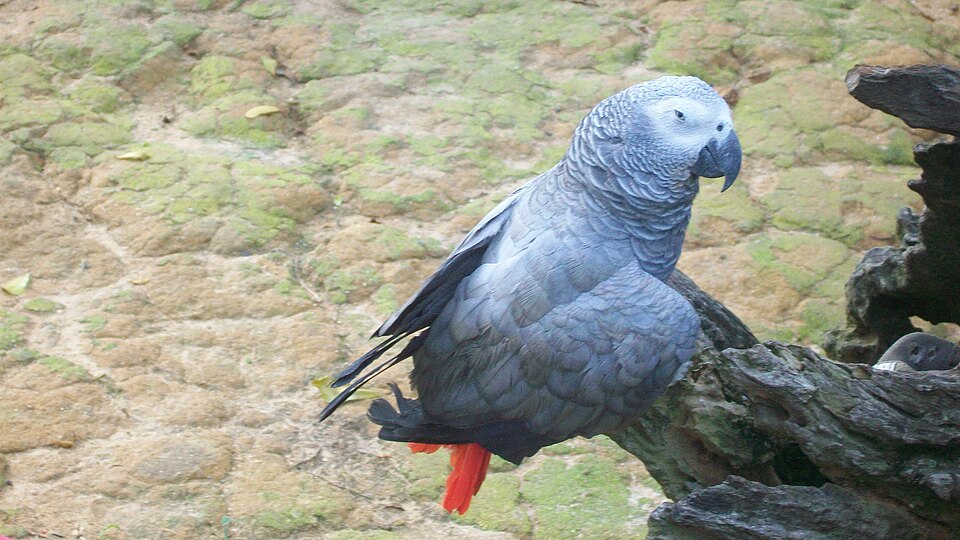
Parrot lifespan spans a factor of six across the family — species is the whole answer.
The facts in one table
| Range across species | 10 to 60 years |
| Upper end, in human care | Up to 60 years |
| What drives the difference | Species and body size: the largest parrots live longest |
| Why the number is uncertain | Few long-term records exist for most species, in the wild or in captivity |
Range from the San Diego Zoo Wildlife Alliance parrot page.
Source: San Diego Zoo Wildlife Alliance
Species is the whole answer
Parrots cover everything from budgerigars small enough to sit in a hand to macaws with a wingspan over a metre, and lifespan tracks that scale closely. The small species sit near the bottom of the 10-to-60-year range; the large macaws and cockatoos sit at the top. Anyone quoting a single number for "parrots" has flattened a family that spans a factor of six.
The San Diego Zoo also notes something that captures why these birds are kept at all: some African grey parrots can "speak" over 700 words. Combine that with a potential six decades and you have an animal whose commitment horizon is unlike almost any other pet — it can outlive the person who buys it.
Source: San Diego Zoo Wildlife Alliance
Captive records, wild uncertainty
Almost all long lifespans reported for parrots come from birds in human care, where the individual can be followed for decades and where predation and food shortage are removed. Wild figures are much harder: following a wild parrot for fifty years requires a study that outlives its own researchers, so wild lifespan for most species is an estimate rather than a measurement.
That asymmetry is worth keeping in mind when comparing numbers. A zoo figure of up to 60 years describes the best case under constant care; it is not a claim about what a wild parrot of the same species typically achieves.
Source: San Diego Zoo Wildlife Alliance
What a 60-year animal means in practice
The practical consequence of the upper end of that range is legal and logistical rather than biological: large parrots are routinely rehomed because their owner's circumstances changed, and provision for the bird after the owner's death is a real question rather than a morbid one. Specialist rescues exist largely because of this mismatch between a bird's lifespan and a human plan.
The other consequence is veterinary. Decades of life means decades of husbandry — diet, light, social contact, beak and feather condition — and the species-specific detail of all of that is a matter for an avian veterinarian rather than a general lifespan page.
These are population figures, not a prediction for one animal, and nothing here is a care plan. For anything about a specific animal's health, weight or age, consult a veterinarian.
Source: San Diego Zoo Wildlife Alliance
What most people get wrong
- "Parrots live about 50 years." Only the largest species approach that. The published range across species is 10 to 60 years.
- "A captive record is a typical lifespan." Reported maxima come from birds in constant care; wild lifespans for most species are estimates.
- "Lifespan does not depend on size." Within parrots it tracks body size closely — small species at the bottom of the range, macaws and cockatoos at the top.
Source: San Diego Zoo Wildlife Alliance
Frequently asked questions
- How long do parrots live?
- The San Diego Zoo Wildlife Alliance gives 10 to 60 years depending on species, with up to 60 years reached in human care.
- Which parrots live longest?
- The largest species — macaws and cockatoos — sit at the top of the range; small species such as budgerigars sit at the bottom.
- Do wild parrots live as long as captive ones?
- Reported maxima come almost entirely from birds in human care. Wild lifespan is much harder to measure and is usually an estimate.
How to read the numbers
The numbers on “How long do parrots live?” come from the facts table at the top, with the official source alongside.
Where the data comes from
Each section of “How long do parrots live?” names its source (agency, university or breed club) with a verification date.
What this page doesn’t replace
Educational information, not a substitute for a vet, agronomist or specialist assessing your specific case.
Go deeper at the official source
To go deeper than “How long do parrots live?”, the source named below publishes the original document.
Words on this page
Life cycle
The sequence of stages an organism passes through from birth to death — for an animal, young, adult and senior; for a plant, germination, growth, flowering and, in annuals, death after setting seed.
Hypoallergenic
A term used for breeds that shed less allergen into the environment, usually because they shed less fur. No dog or cat breed is fully allergen-free: a cat’s main allergen comes from saliva and skin, not only fur, and a very sensitive person can react to any breed.
Standard definition by American Kennel Club · Hypoallergenic
Toxicity
A plant’s or substance’s capacity to harm an organism, which varies with the species exposed, the amount ingested and the animal’s size. A plant "toxic to dogs" is not necessarily toxic to humans at the same dose, and the reverse holds too.
Standard definition by ASPCA — Animal Poison Control Center · Toxicity
Dormancy
The period when a plant slows its metabolism and stops visible growth, usually in autumn and winter, to survive cold or drought. Pruning, transplanting or fertilising during dormancy is usually less stressful for the plant than doing it in full growth.
Hardiness zone
A numbered band that ranks a region by the average coldest winter temperature it reaches, used to tell whether a plant survives there outdoors. The reference system is the US one (USDA), from zone 1, coldest, to 13, warmest.
Standard definition by USDA — Agricultural Research Service, Plant Hardiness Zone Map · Hardiness zone
Formative pruning vs. maintenance pruning
Formative pruning happens in a plant’s first years and sets the permanent shape of the main branches; maintenance pruning is yearly, removes dead, diseased or crossing branches, and does not change the plant’s architecture. Mixing the two up is the most common reason a fruit tree fails to bear fruit.
Sources
- Parrot — San Diego Zoo Wildlife Alliance. Checked on 2026-10-07.