How long do cats live?
The first proper life tables for companion cats put it at 11.74 years. The Royal Veterinary College, working with researchers at National Chung Hsing University, analysed 7,936 cats under primary veterinary care in the UK that died between January 2019 and March 2021, and reported life expectancy at birth of 11.74 years overall. Sex matters more in cats than in dogs: females reached 12.51 years against 11.18 for males, a gap of 1.33 years.
Updated on 2026-10-07.
These are population figures, not a prediction for one animal, and nothing here is a care plan. For anything about a specific animal's health, weight or age, consult a veterinarian.
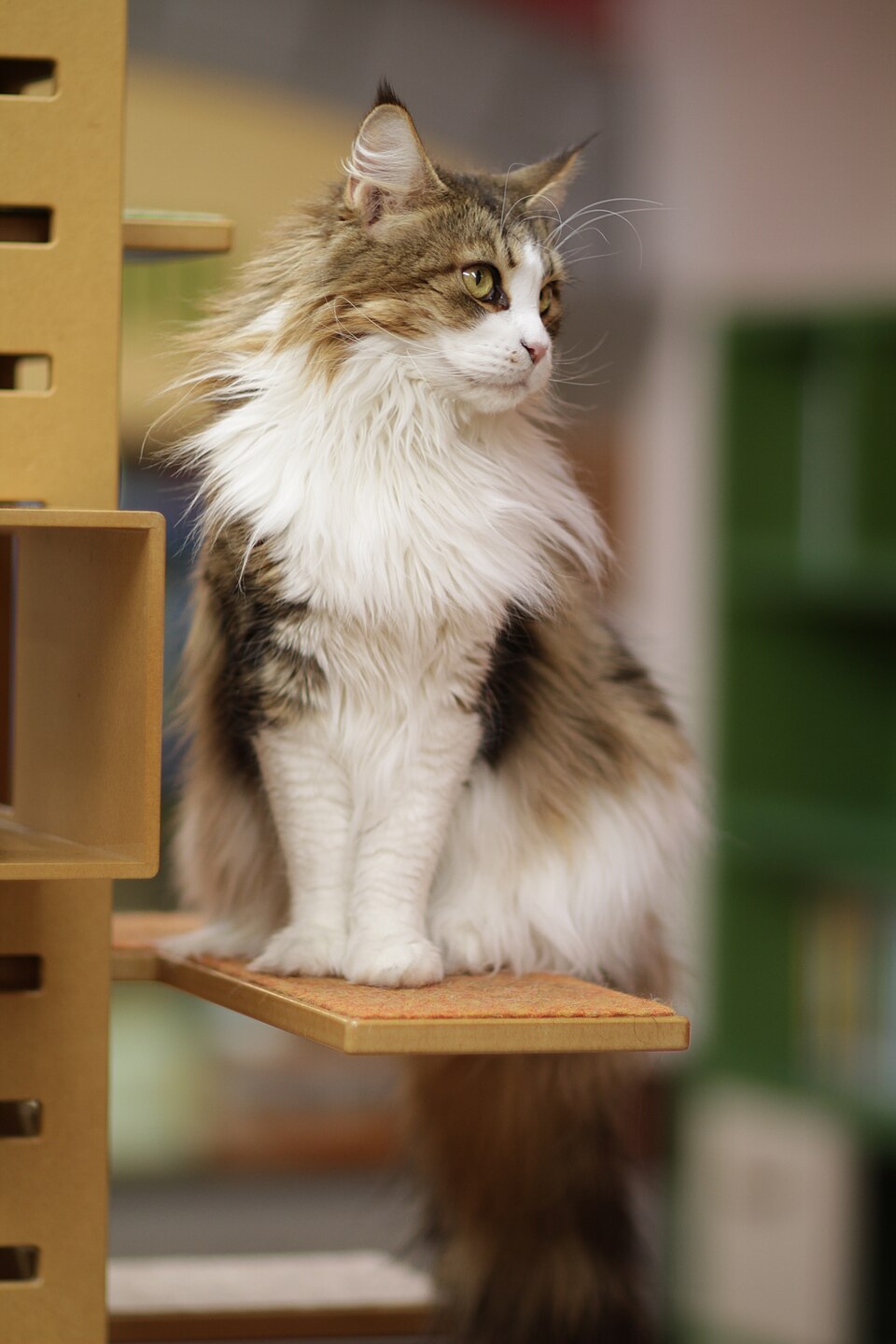
Breed and sex both move the figure: Burmese and Birman reach 14.4 years, females 12.51.
The facts in one table
| All cats, life expectancy at birth | 11.74 years (95% CI 11.61–11.87) |
| Females | 12.51 years |
| Males | 11.18 years |
| Burmese and Birman | 14.4 years — the highest measured |
| Crossbreed cats | 11.9 years |
| Siamese | 11.7 years |
| Sphynx | 6.8 years — the lowest measured |
| Study population | 7,936 cats that died between 1 Jan 2019 and 31 Mar 2021, UK primary veterinary care |
All rows from the VetCompass cat life tables (Royal Veterinary College, published in the Journal of Feline Medicine and Surgery, 2024).
Sources: Royal Veterinary College — VetCompass · Royal Veterinary College
Sex and breed: both move the number
The 1.33-year advantage for female cats is one of the clearest effects in the study, and it is larger than the equivalent gap in dogs. Breed moves things further: Burmese and Birman share the top position at 14.4 years, which is two and a half years above the overall figure, while the Sphynx comes in at 6.8 years — a little over half the average.
Crossbreed cats reached 11.9 years, slightly above the overall 11.74 and above the Siamese at 11.7. As with dogs, the general expectation that non-pedigree animals do better holds in direction but not as a rule: two pedigree breeds sit well above every crossbreed figure in the study.
Sources: Royal Veterinary College — VetCompass · Royal Veterinary College
Why this number is lower than you expected
Most people know a cat that lived to eighteen, so 11.74 years feels wrong. The reason is the same as with dogs: this is life expectancy at birth from a life table, so every kitten and young cat that died is in the calculation. The figure is not the age a cat typically reaches if it survives to adulthood, which is higher — it is the expectation for a newborn given the full pattern of mortality.
That framing is what makes the breed comparisons meaningful. A breed figure of 6.8 years does not mean individual animals of that breed die at 6.8; it means the pattern of deaths across all ages, including young ones, produces that expectation. For an owner, the useful reading is relative: these breeds do substantially better or worse than the average, measured the same way.
What the study does not tell you
Only four breeds plus crossbreeds have published figures here, so most of the recognised breeds have no number — and this page leaves those blanks rather than filling them with estimates. The population is also specific: UK cats in veterinary care in a two-year window, which means cats with an owner who takes them to a vet at all.
It also says nothing about any individual animal, which is the thing owners most want it to say. What is in an owner's hands — weight, dental care, vaccination, parasite control, whether problems get looked at early — is exactly the part a life table cannot capture, and exactly the part to discuss with a veterinarian.
These are population figures, not a prediction for one animal, and nothing here is a care plan. For anything about a specific animal's health, weight or age, consult a veterinarian.
Sources: Royal Veterinary College — VetCompass · Royal Veterinary College

Siamese: 11.7 years of life expectancy at birth.
What most people get wrong
- "Cats live 15 years." The measured life expectancy at birth is 11.74 years; the 15-plus figure describes cats that already survived to adulthood.
- "Pedigree cats are healthier." Burmese and Birman top the table at 14.4 years, but the Sphynx is lowest at 6.8 and crossbreeds reach 11.9.
- "Male and female cats live about the same." Females reached 12.51 years against 11.18 for males — a 1.33-year difference.
- "The study covers every breed." It reports figures for four breeds plus crossbreeds; the rest have no published number.
Sources: Royal Veterinary College — VetCompass · Royal Veterinary College
Frequently asked questions
- What is the average lifespan of a cat?
- 11.74 years of life expectancy at birth in the VetCompass UK study, with females at 12.51 and males at 11.18 years.
- Which cat breed lives longest?
- Burmese and Birman, both at 14.4 years of life expectancy at birth.
- How many cats were studied?
- 7,936 cats under primary veterinary care in the UK that died between 1 January 2019 and 31 March 2021.
- Why is the Sphynx figure so low?
- The study reports 6.8 years for the breed, the lowest it measured. As a life-table figure it is weighed down heavily by deaths at young ages.
How to read the numbers
The numbers on “How long do cats live?” come from the facts table at the top, with the official source alongside.
Where the data comes from
Each section of “How long do cats live?” names its source (agency, university or breed club) with a verification date.
What this page doesn’t replace
Educational information, not a substitute for a vet, agronomist or specialist assessing your specific case.
Go deeper at the official source
To go deeper than “How long do cats live?”, the source named below publishes the original document.
Words on this page
Life cycle
The sequence of stages an organism passes through from birth to death — for an animal, young, adult and senior; for a plant, germination, growth, flowering and, in annuals, death after setting seed.
Hypoallergenic
A term used for breeds that shed less allergen into the environment, usually because they shed less fur. No dog or cat breed is fully allergen-free: a cat’s main allergen comes from saliva and skin, not only fur, and a very sensitive person can react to any breed.
Standard definition by American Kennel Club · Hypoallergenic
Toxicity
A plant’s or substance’s capacity to harm an organism, which varies with the species exposed, the amount ingested and the animal’s size. A plant "toxic to dogs" is not necessarily toxic to humans at the same dose, and the reverse holds too.
Standard definition by ASPCA — Animal Poison Control Center · Toxicity
Dormancy
The period when a plant slows its metabolism and stops visible growth, usually in autumn and winter, to survive cold or drought. Pruning, transplanting or fertilising during dormancy is usually less stressful for the plant than doing it in full growth.
Hardiness zone
A numbered band that ranks a region by the average coldest winter temperature it reaches, used to tell whether a plant survives there outdoors. The reference system is the US one (USDA), from zone 1, coldest, to 13, warmest.
Standard definition by USDA — Agricultural Research Service, Plant Hardiness Zone Map · Hardiness zone
Hemisphere
Half of the globe split by the equator. The seasons flip between the two: when it is winter in the northern hemisphere, it is summer in the southern one, which shifts the pruning, bloom and harvest calendar described on this page.
Sources
- Life tables of annual life expectancy and risk factors for mortality in cats in the UK (JFMS, 2024) — Royal Veterinary College — VetCompass. Checked on 2026-10-07. 7.936 gatos que morreram entre 1/1/2019 e 31/3/2021, sob atendimento veterinário primário no Reino Unido.
- New research from the RVC predicts the future life expectancy for companion cats — Royal Veterinary College. Checked on 2026-10-07.