Weather glossary
The terms that show up in your city forecast, defined one by one, with the official source wherever the term has a standardised definition.
8 terms · The definitions are ours; where a term has an official definition, the source is named.
- Apparent temperature
- Dew point
- Relative humidity
- Millimetre of rain
- Beaufort scale
- Climate normal
- Forecast model
- Model run
- Apparent temperature
- The temperature the body actually feels, rather than the one on the thermometer. It combines air temperature with wind, which carries heat away faster, and humidity, which slows the evaporation of sweat. That is why 30 °C in dry air with a breeze is easier than 28 °C in still, muggy air.
- Dew point
- The temperature air would have to cool to, at constant pressure and moisture, for water to start condensing. The closer the dew point sits to the air temperature, the less room the vapour has and the muggier the day feels.
- Relative humidity
- How much water vapour the air holds compared with the most it could hold at that temperature, as a percentage. Because that ceiling rises with heat, the same amount of vapour reads high at dawn and low in the afternoon.
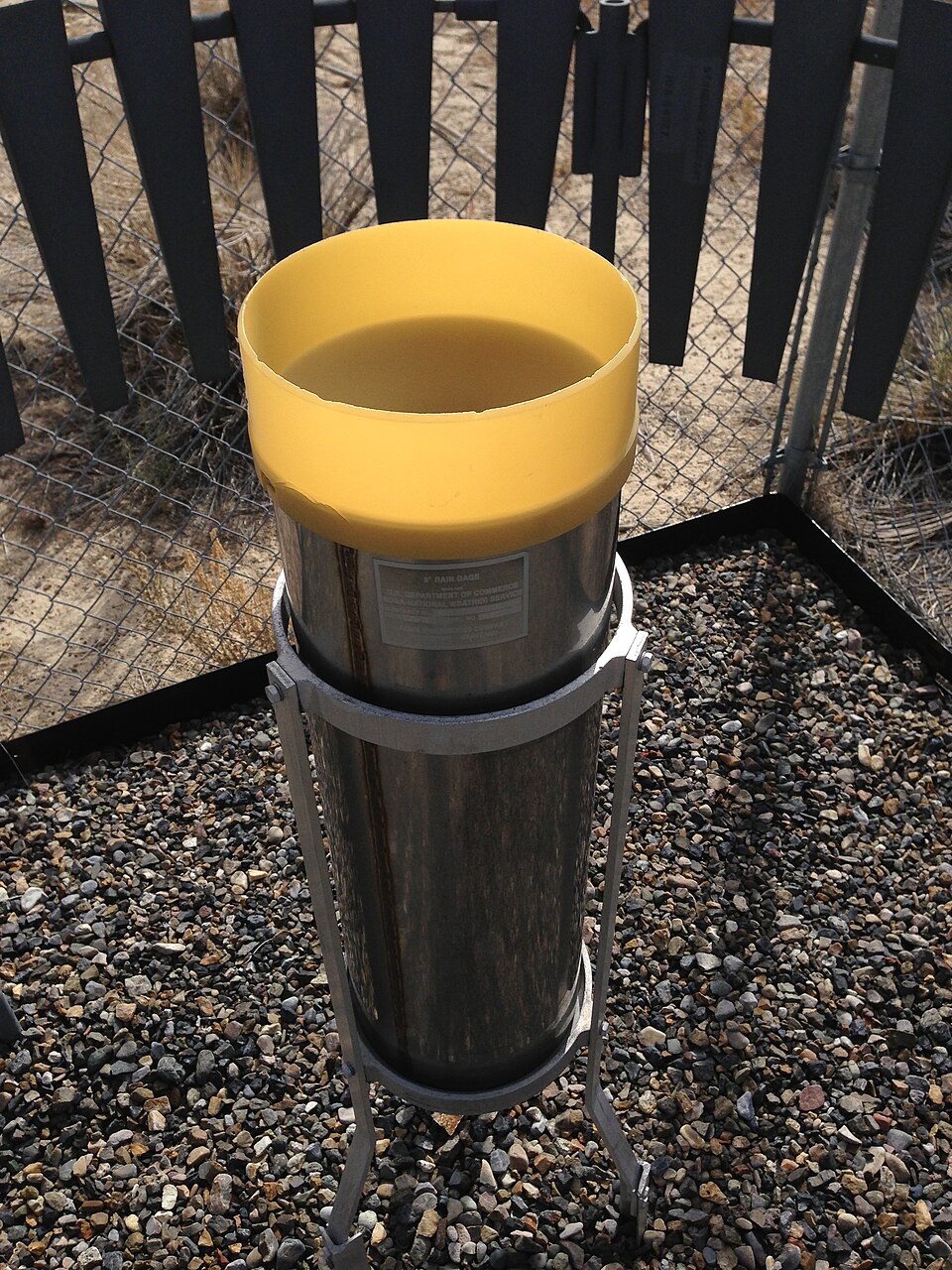
- Millimetre of rain
- The depth of water rain would leave on a flat surface with no run-off. One millimetre is one litre per square metre, no matter how large the area measured is.
- Standard definition by World Meteorological Organization (WMO)
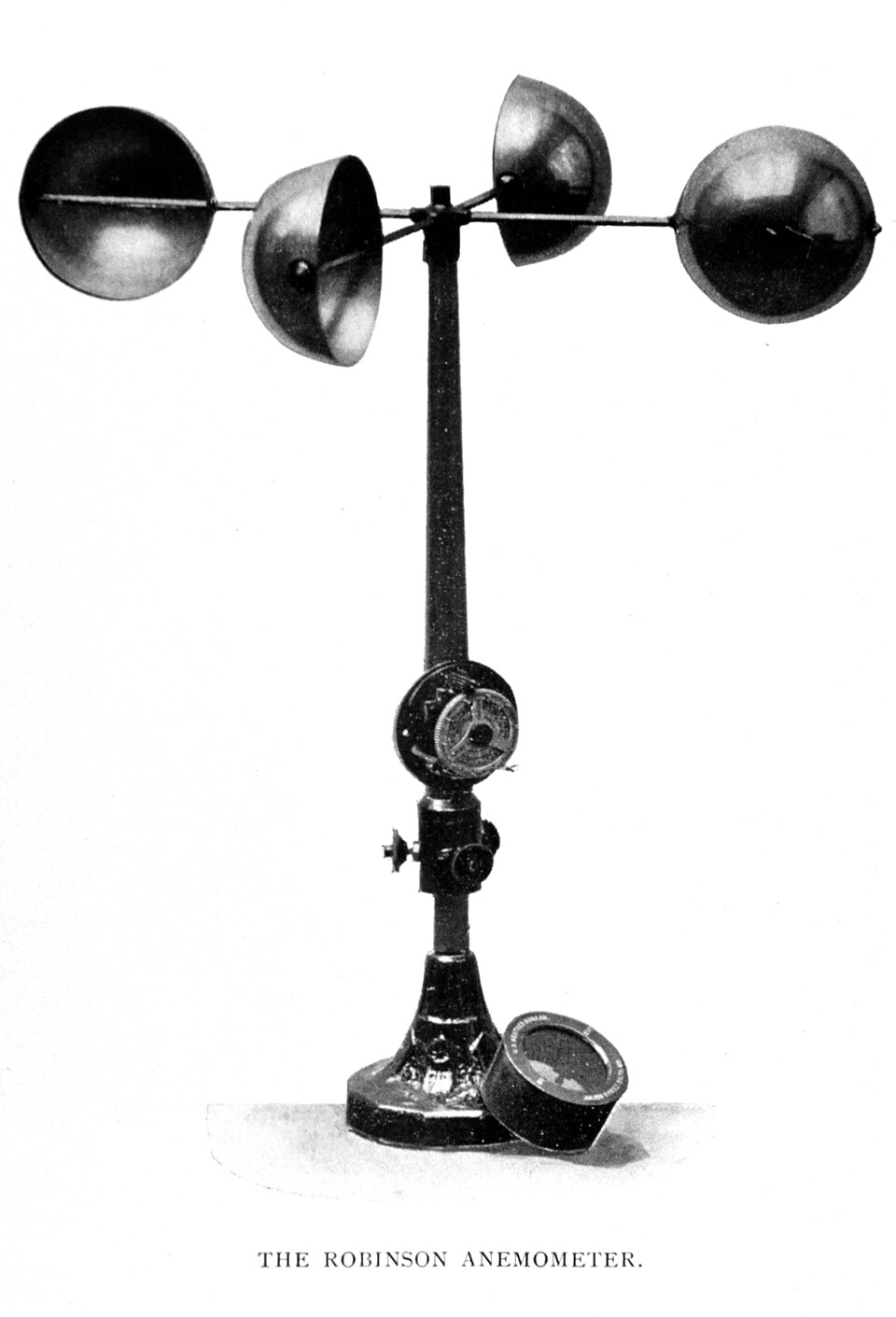
- Beaufort scale
- A 0-to-12 scale that describes wind strength by what it visibly does: smoke rising straight up at 0, leaves moving at 3, large branches bending at 6, roof damage at 9, devastation at 12. It began at sea in the nineteenth century and now has an official equivalence in metres per second.
- Standard definition by World Meteorological Organization (WMO)
- Climate normal
- The average of a climate element — temperature, rainfall, humidity — computed over a long, standardised period, usually thirty years. It does not predict anything: it says what is typical for that place in that month, and gives you a ruler for calling a week warm or wet.
- Standard definition by World Meteorological Organization (WMO)
- Forecast model
- A program that solves the equations of the atmosphere on a grid of points and steps forward in time from the state observed now. Your city forecast is the model value at the nearest grid point, which is why two neighbouring towns get almost the same numbers.
- Standard definition by MET Norway (Meteorologisk institutt)
- Model run
- The time the model was executed with the latest observations. Every forecast belongs to a run, and runs age: one from six hours ago knows nothing about the shower that started afterwards. It is the first thing to check when two sources disagree.
- Standard definition by MET Norway (Meteorologisk institutt)