Everyday astronomy glossary
The terms in the sunrise, sunset, twilight and moon-phase tables, defined one by one.
8 terms · The definitions are ours; where a term has an official definition, the source is named.
- Civil twilight
- Nautical twilight
- Astronomical twilight
- Solar noon
- Golden hour
- Solstice
- Moon phase
- Moon illumination
- Civil twilight
- The period when the centre of the Sun sits between the horizon and 6° below it. There is still enough light to walk outdoors and make out objects without a lamp, and it is the threshold many traffic codes use to require headlights.
- Standard definition by U.S. Naval Observatory — Astronomical Applications Department
- Nautical twilight
- The Sun between 6° and 12° below the horizon. The name comes from navigation: it is the window in which the sea horizon and the bright stars are visible at the same time, which is what made sextant fixes possible.
- Standard definition by U.S. Naval Observatory — Astronomical Applications Department
- Astronomical twilight
- The Sun between 12° and 18° below the horizon. Once it ends the sky is astronomically dark: scattered sunlight no longer interferes and faint galaxies and nebulae become observable. At high latitudes in summer that moment never arrives.
- Standard definition by U.S. Naval Observatory — Astronomical Applications Department
- Solar noon
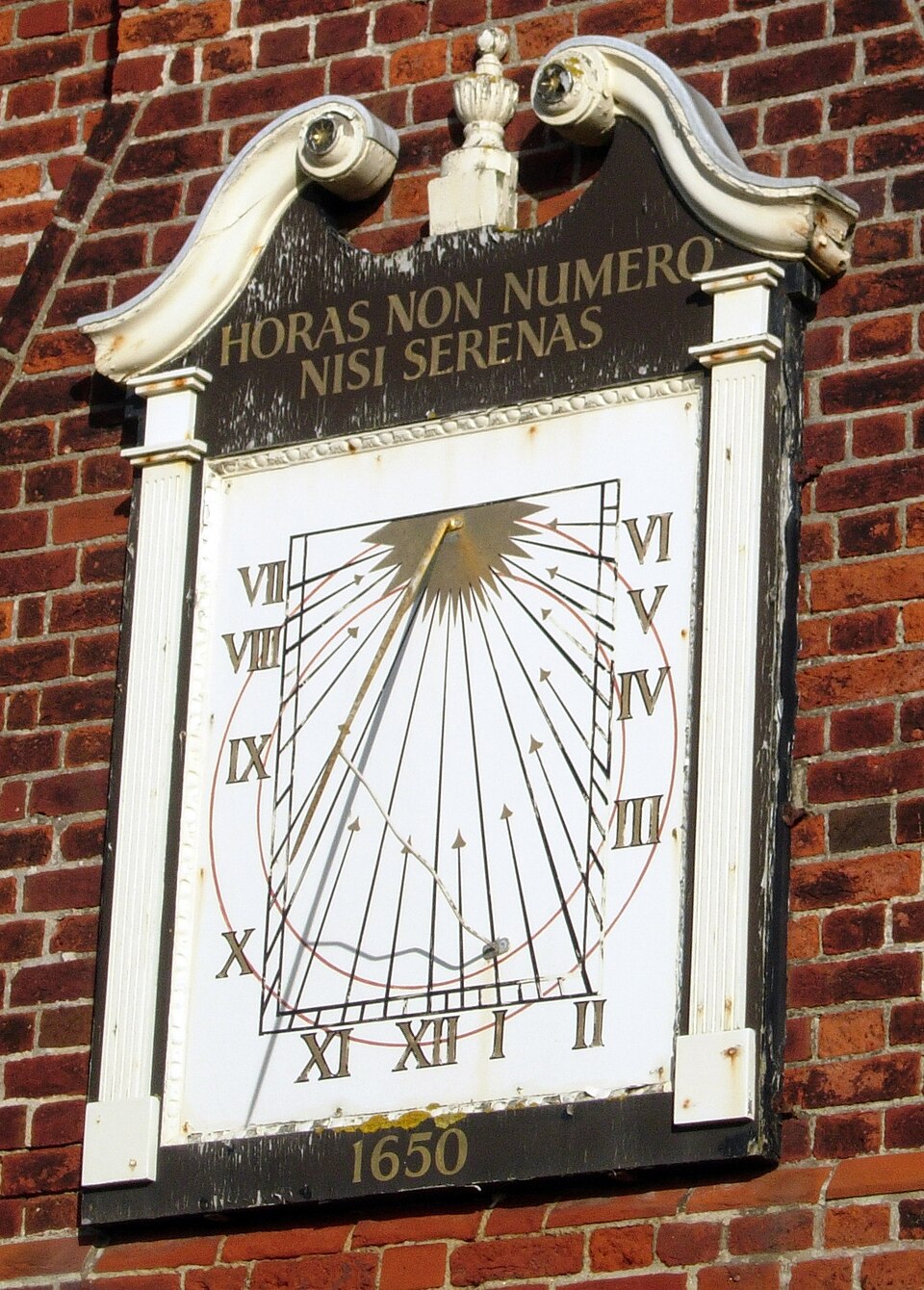
- The instant the Sun crosses the local meridian and reaches its highest point of the day. It almost never falls at 12:00 on the clock: time zones are a political convention, your city is rarely on the zone’s central meridian, and the equation of time shifts the Sun by up to about sixteen minutes over the year.
- Golden hour
- The stretch when the Sun is low — roughly between 6° above and 4° below the horizon — so its light crosses far more atmosphere and turns warm and soft, with long shadows. It does not last an hour: near the equator it is a few minutes, at high latitude it can run past two hours.
- Solstice
- The moment the Sun reaches its greatest northern or southern declination and appears to stand still before turning back. It marks the longest and the shortest day of the year in each hemisphere, around 21 June and 21 December.
- Standard definition by U.S. Naval Observatory — Astronomical Applications Department
- Moon phase
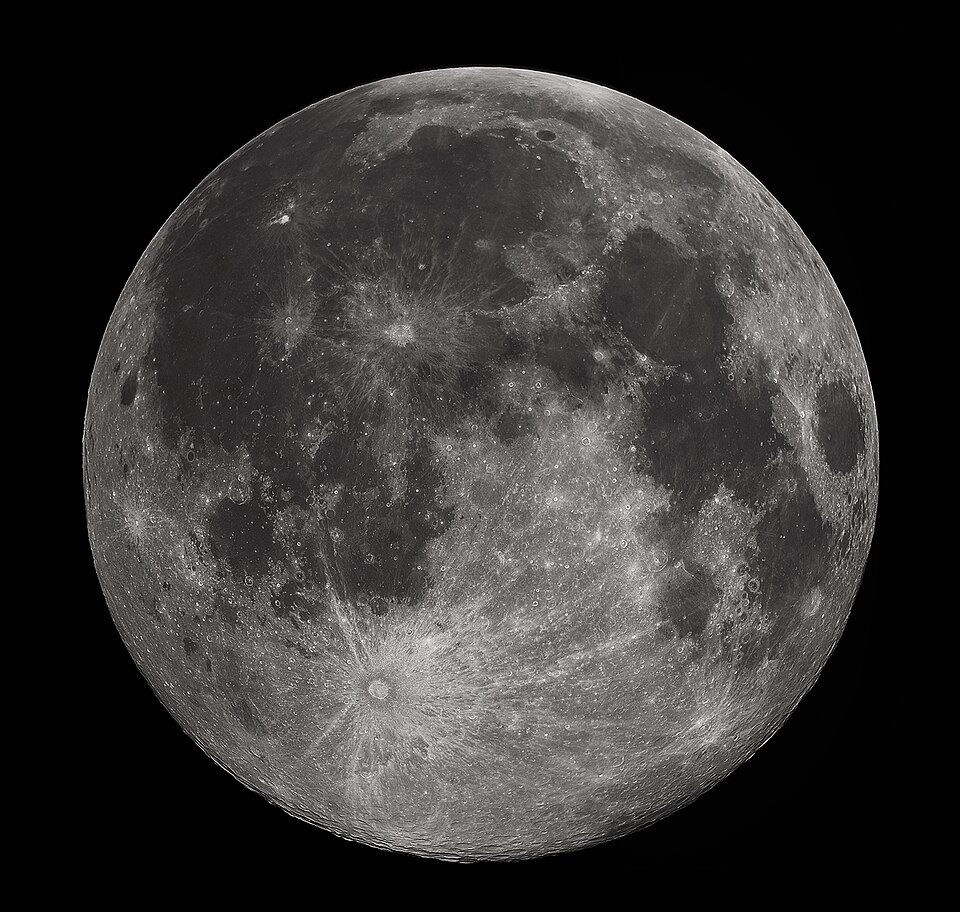
- The share of the Moon’s disc lit by the Sun that Earth can see, set by the angle between Sun, Earth and Moon. A full cycle, new moon to new moon, takes about 29.53 days and is called the synodic month. The Moon has no permanent dark side, only a side we never face.
- Moon illumination
- The percentage of the visible lunar disc that is lit. It is 0% at new moon, 50% at the quarters and 100% at full moon, moving a few points a day. Because brightness climbs fastest near full moon, 90% already washes out the sky almost as much as 100%.